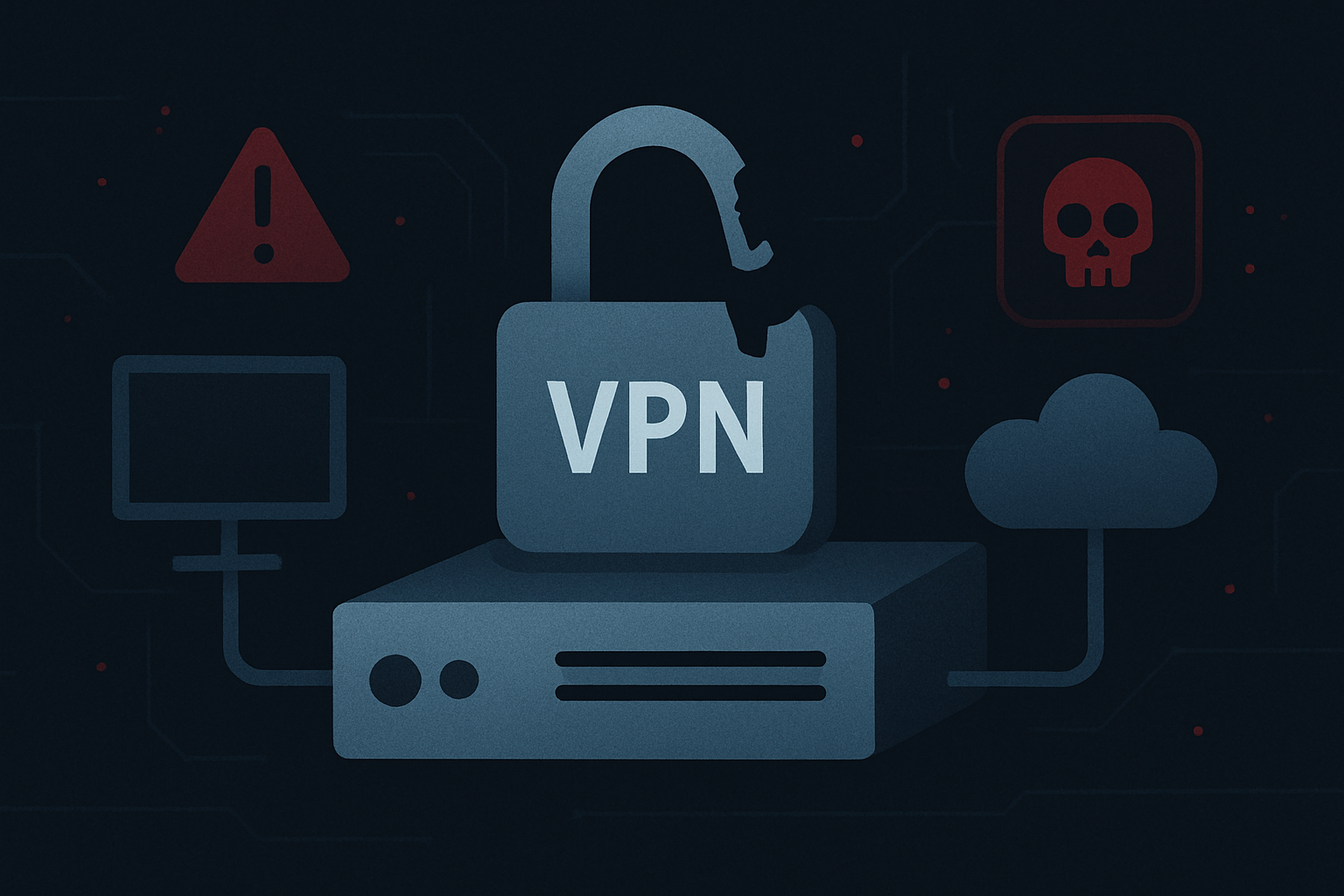
Palo Alto Networks disclosed that CVE-2026-0257, a medium-severity authentication bypass affecting PAN-OS and Prisma Access, is now under active exploitation in the wild. With a CVSS score of 7.8, the flaw allows attackers to establish unauthorised VPN connections—a capability that transforms what might appear a modest severity rating into a genuine operational threat.
Why Authentication Bypass in VPN Infrastructure Matters
VPN appliances sit at a critical boundary in network architecture. They're the gatekeepers between external users and internal infrastructure, and authentication is the only mechanism preventing unauthorised access. When that gate fails, the consequence isn't merely a vulnerability; it's a direct path into your perimeter.
An authentication bypass in GlobalProtect—Palo Alto's remote access VPN solution—means an attacker with network visibility to the appliance can gain VPN access without valid credentials. They don't need to exploit subsequent flaws, trick users, or perform credential theft. The appliance itself grants them entry.
This is particularly concerning for organisations using Prisma Access, which extends this gateway model to cloud-hosted infrastructure. In that context, a compromised VPN connection potentially grants access not just to on-premises networks, but to cloud workloads and hybrid environments.
Active Exploitation and Real-World Risk
The notation of 'active exploitation in the wild' isn't theoretical. Threat actors have moved beyond proof-of-concept code to weaponised tools deployed against actual targets. This usually means:
- Exploit code is either public or circulating in private channels.
- Attack infrastructure is already instrumented to test and refine the attack chain.
- Initial access brokers may be offering VPN credentials harvested through this method as a commodity on underground markets.
The window between active exploitation and widespread adoption of a patch is typically measured in days, not weeks. Organisations running unpatched PAN-OS instances are essentially operating on a deadline.
Remediation and Detection Strategy
The immediate step is identifying affected instances. Check your Palo Alto Networks security advisories for the specific PAN-OS and Prisma Access versions in scope, then cross-reference against your own estate. Many organisations maintain this appliance in hybrid form—some physical, some virtual, possibly distributed across multiple sites.
Patching should follow a deliberate sequence. Test patches in a non-production environment first; VPN appliances cannot be down for long without triggering business impact. Some organisations use active-passive or clustered deployments precisely for this reason—patch one appliance whilst the other maintains service, then switch.
For detection, examine VPN connection logs for anomalous patterns: connections from unexpected geographies, failed followed by successful authentication attempts, or sessions established at unusual hours. Many breaches involve a period where attackers test access before moving laterally; early detection of these probes can prevent escalation.
Consider temporarily restricting VPN access by source IP if your user base operates from known, stable networks. If your workforce is genuinely global, this may not be practical, but even a moderate restriction reduces the attack surface.
The Broader Pattern
Authentication bypass flaws in VPN infrastructure recur with enough frequency to suggest a structural issue in how these systems are tested. Palo Alto is a mature vendor with substantial security resources. Yet CVE-2026-0257 reached production deployment and active exploitation before public disclosure. This implies either the flaw was subtle enough to slip past initial review cycles, or disclosure was handled without sufficient warning time for operators to prepare patches.
Infrastructure teams should treat active VPN exploits as a class-1 incident, regardless of the official severity rating. The CVSS score reflects the technical properties of the flaw, but its operational impact—direct unauthorised access to your network boundary—is often far more severe than the number suggests. Patch velocity and network segmentation matter more in this context than strict adherence to vendor severity classifications.