
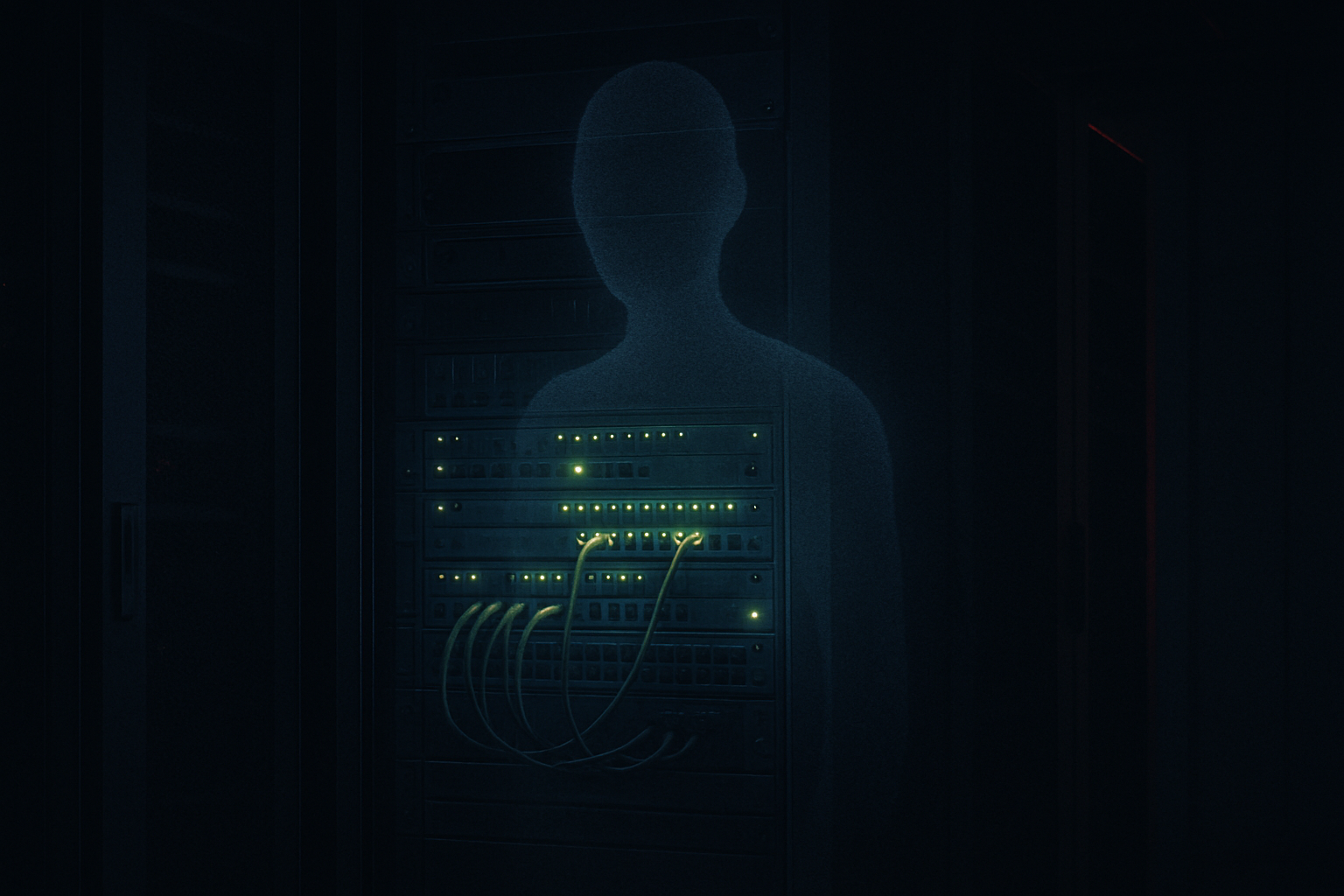
Infrastructure teams frequently discover AI agents running on production or development systems without any formal approval process, credential auditing, or ownership assignment. These tools accumulate API keys, database passwords, and system access tokens—often with the same permissions as an unvetted contractor. Yet most organisations treat them as benign productivity enhancements rather than security liabilities.
The Credentials Problem
An AI agent configured to access internal APIs or cloud services needs to authenticate somehow. In practice, this means storing credentials directly on the system where the agent runs. Those credentials—AWS keys, database passwords, API tokens, SSH keys—now exist in multiple places: the agent's configuration files, environment variables, and potentially in logs or cache.
Unlike a human employee with formal access provisioning, an AI agent typically gets these credentials through informal installation: someone pastes a config file, runs a setup script, or connects it to a service without documenting what permissions were granted. If that agent's process is compromised, or if the system it runs on is breached, an attacker gains the full credential set with no additional exploitation needed.
From an infrastructure audit perspective, this is indistinguishable from an unchecked insider account. The difference is that nobody's monitoring the insider.
Visibility and Accountability Gaps
Traditional infrastructure controls assume human actors. Access reviews look for named users. Audit logs track logins and commands. But an AI agent doesn't log in; it runs as a background process, often under a generic service account. Its actions blend into legitimate system activity. When you query who modified a configuration file or called an API endpoint, the agent's activity looks like automated maintenance rather than a distinct actor.
This creates a blind spot. A compromised agent or a misconfigured one can access resources, move data, or modify systems, and your existing monitoring won't flag it as anomalous because the agent isn't a named entity in your access control model.
The accountability problem is equally serious. If an AI agent exfiltrates data or causes a production incident, who is responsible? The employee who installed it? The vendor who built it? The organisation that allowed it to run unsupervised? Without ownership assignment and formal approval, the answer is typically nobody.
Practical Detection and Control
Begin by treating AI agents as you would any third-party service with system access. Inventory what's running: search process lists for known agent frameworks, scan for unusual background services, and audit startup configurations. Many teams find agents running on laptops, developer machines, and CI/CD systems simply because no one enforced a procurement process.
Once identified, apply least-privilege principles. Rather than giving an agent access to production databases or your entire cloud account, provision dedicated, narrowly scoped credentials. Use temporary tokens with short lifespans instead of static keys. Segregate the agent to a dedicated account so its activity shows up distinctly in logs.
Establish clear ownership: which team approved the agent, who maintains it, and who is responsible if it fails or is compromised? Document what credentials it holds and audit that list regularly. For infrastructure-adjacent agents—those running on servers or accessing internal systems—treat them with the same rigour you'd apply to a new employee account.
Monitoring should go beyond general process health. Log all API calls and system access from the agent's account, alert on unusual patterns, and periodically review what the agent actually did versus what it was supposed to do. If an agent is calling endpoints it shouldn't or accessing resources outside its stated purpose, you want to know immediately.
A Shifting Risk Model
The widespread adoption of AI agents for internal tasks represents a genuine shift in how organisations manage infrastructure. Unlike traditional services installed through a package manager or deployed through Infrastructure-as-Code, many AI agents arrive informally—installed by individual engineers to solve immediate problems, then forgotten. They run without formal capacity planning, security review, or incident response planning.
From the perspective of a security or infrastructure team, this is a version of shadow IT that happens to be automated. The core insight is straightforward: an unmonitored process with broad access and stored credentials is an insider threat, regardless of whether a human or an algorithm is making the decisions.
The solution isn't to ban AI agents from internal use. It's to bring them inside your existing governance and security frameworks. Assign ownership, audit credentials, monitor activity, and enforce the same access controls you apply to every other system with a foothold in your infrastructure.


