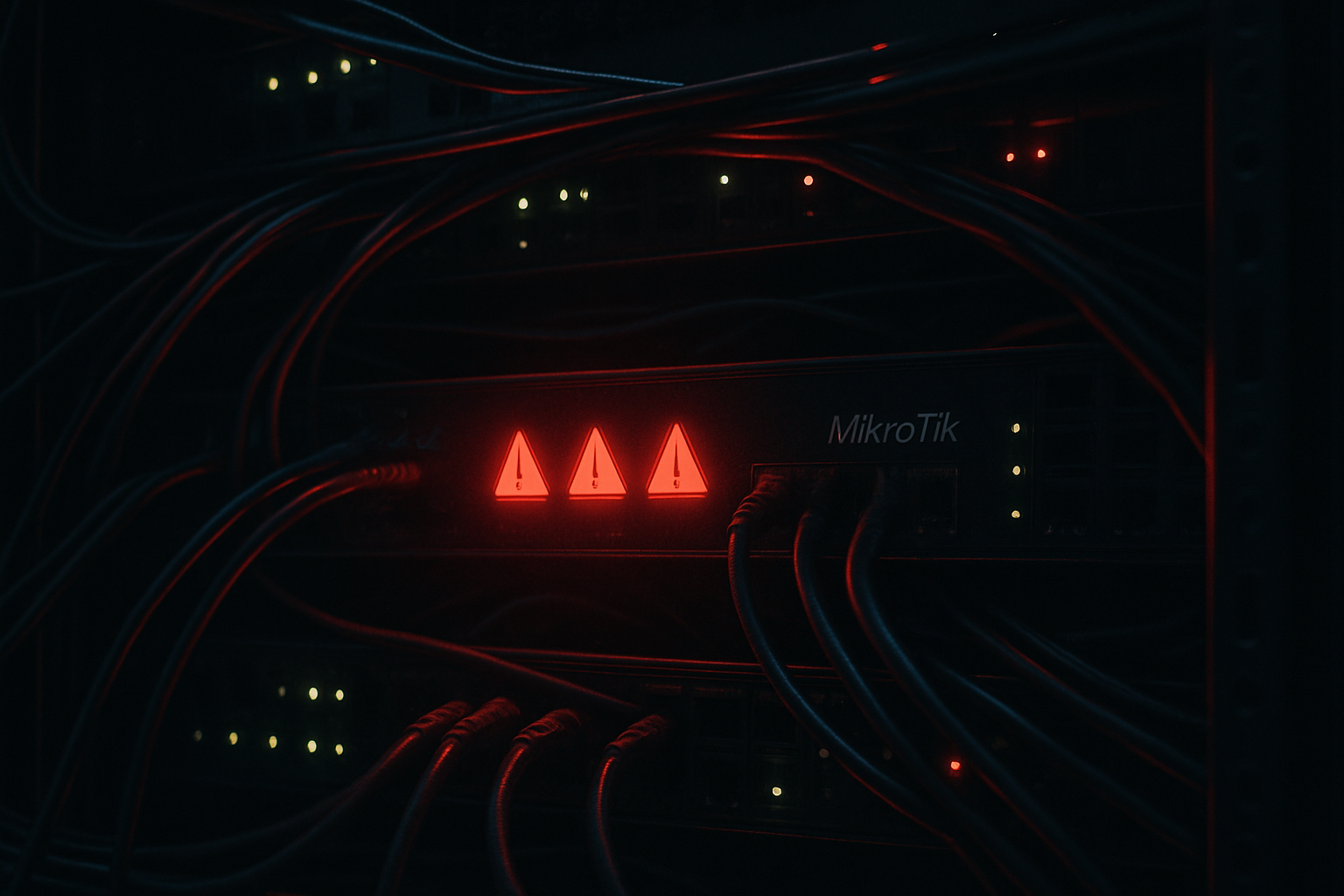
Datacenter operators and hosting providers relying on MikroTik routers for edge network management face an immediate threat. Attackers are systematically compromising MikroTik devices with internet-reachable Secure Shell (SSH) services by bypassing authentication entirely, according to a warning from CERT Polska published in early September. The vulnerability grants full administrative access once a connection is established.
The Nature of the Exposure
MikroTik RouterOS is ubiquitous in smaller datacenters, colocation facilities, and hosting operations—often deployed for edge routing, bandwidth management, and network segmentation. Many administrators expose the SSH service to the internet for remote management convenience, a practice that reduces friction during emergencies but introduces significant risk if not properly gated.
What makes this particular attack pattern notable is the absence of credential negotiation. The attacker does not need to guess or brute-force a password. Once SSH connectivity is established to a vulnerable device, administrative privileges are granted without further authentication checks. This suggests either a logic flaw in the SSH implementation or a misconfiguration that disables authentication entirely in certain scenarios.
Confirmed attacks date to at least 2 September, meaning devices have already been compromised in live environments. The scope remains unclear—CERT Polska has not disclosed victim counts—but given MikroTik's market share in smaller ISP and hosting infrastructure, the actual number of affected deployments could be substantial.
Implications for Infrastructure Operators
A fully compromised edge router grants an attacker several dangerous capabilities. They can reconfigure routing tables to redirect traffic, intercept data flows destined for customer networks, modify firewall rules to exfiltrate sensitive information, or pivot deeper into the datacenter network. If the router sits between customer VLANs and upstream transit, the compromise becomes a bridge into customer infrastructure itself.
For hosting providers managing offshore operations or colocation facilities, this is particularly concerning. A compromised router handling traffic for multiple tenants creates liability and trust issues far beyond the single device. Customer data, DDoS mitigation rules, and packet flows could all be monitored or manipulated.
The attack also raises questions about network segmentation. Many datacenters assume their management networks are trusted and allow SSH access from internal subnets only. But if a MikroTik device is internet-exposed and compromised, it becomes a foothold for lateral movement into supposedly protected administrative networks.
Immediate Response and Hardening
Any infrastructure operator running MikroTik RouterOS should immediately audit which devices have internet-facing SSH services. This includes checking firewall rules, routing policies, and access control lists that might inadvertently expose the SSH port (22) to untrusted networks.
Proper hardening involves several layers. First, restrict SSH access to a known whitelist of management IP addresses or ranges, preferably behind a VPN or bastion host. Second, update RouterOS to the latest stable version—MikroTik typically patches authentication bypasses promptly once identified. Third, disable SSH entirely if remote management is not required, or move it to a non-standard port as a minimal additional barrier.
For high-security deployments, consider implementing SSH key-based authentication exclusively, disabling password authentication, and rotating credentials regularly. Network monitoring should flag any unusual SSH connection patterns or administrative changes to routers.
Organisations running distributed edge infrastructure or managing routers across multiple facilities should automate compliance checks—scanning for internet-exposed SSH services and flagging devices running outdated firmware. This kind of drift detection is far easier to implement than incident response after a compromise.
Broader Lessons
This incident reflects a recurring pattern in infrastructure security: convenience in a single area creates vulnerability across the entire system. Exposing management interfaces to the internet, even for legitimate operational reasons, shifts the burden of security entirely onto proper authentication and patching. When either fails, the consequences cascade quickly.
The infrastructure community—particularly those operating in smaller datacenters or hosting environments where cost and agility often prioritise over formal security review—should treat this as a reminder to audit edge devices systematically. MikroTik routers are reliable and cost-effective, but like any internet-facing service, they demand proper access controls and timely updates.
Given the breadth of MikroTik deployments in emerging markets and smaller colocation facilities, this vulnerability could affect thousands of organisations. Awareness and swift remediation are the only practical defences available until patches are confirmed and widely deployed.