The infrastructure landscape is shifting. Where once we deployed applications and services in relatively static configurations, we now architect systems where autonomous AI agents make decisions, access APIs, and interact with infrastructure components. This introduces a class of security problems that traditional application testing frameworks don't address well.
The Agent Security Testing Gap
AI agents differ from conventional software in ways that matter for security. An agent may be prompted to perform a task in a particular way, but its behaviour under adversarial input, edge cases, or subtle prompt injections remains unpredictable. Unlike deterministic code paths, an agent's response to a given instruction isn't guaranteed—especially when the instruction contains subtle manipulations or conflicting directives.
Infrastructure teams deploying agents face a harder problem than developers building the agent itself. You need confidence that the agent won't leak sensitive data when asked obliquely, won't bypass authorization checks, and won't attempt to escalate privileges or access systems outside its intended scope. Traditional security testing—fuzzing, code review, static analysis—captures some of this. But it doesn't catch cases where an agent is socially engineered into unsafe behavior by a crafted prompt.
Red Teaming as Infrastructure Validation
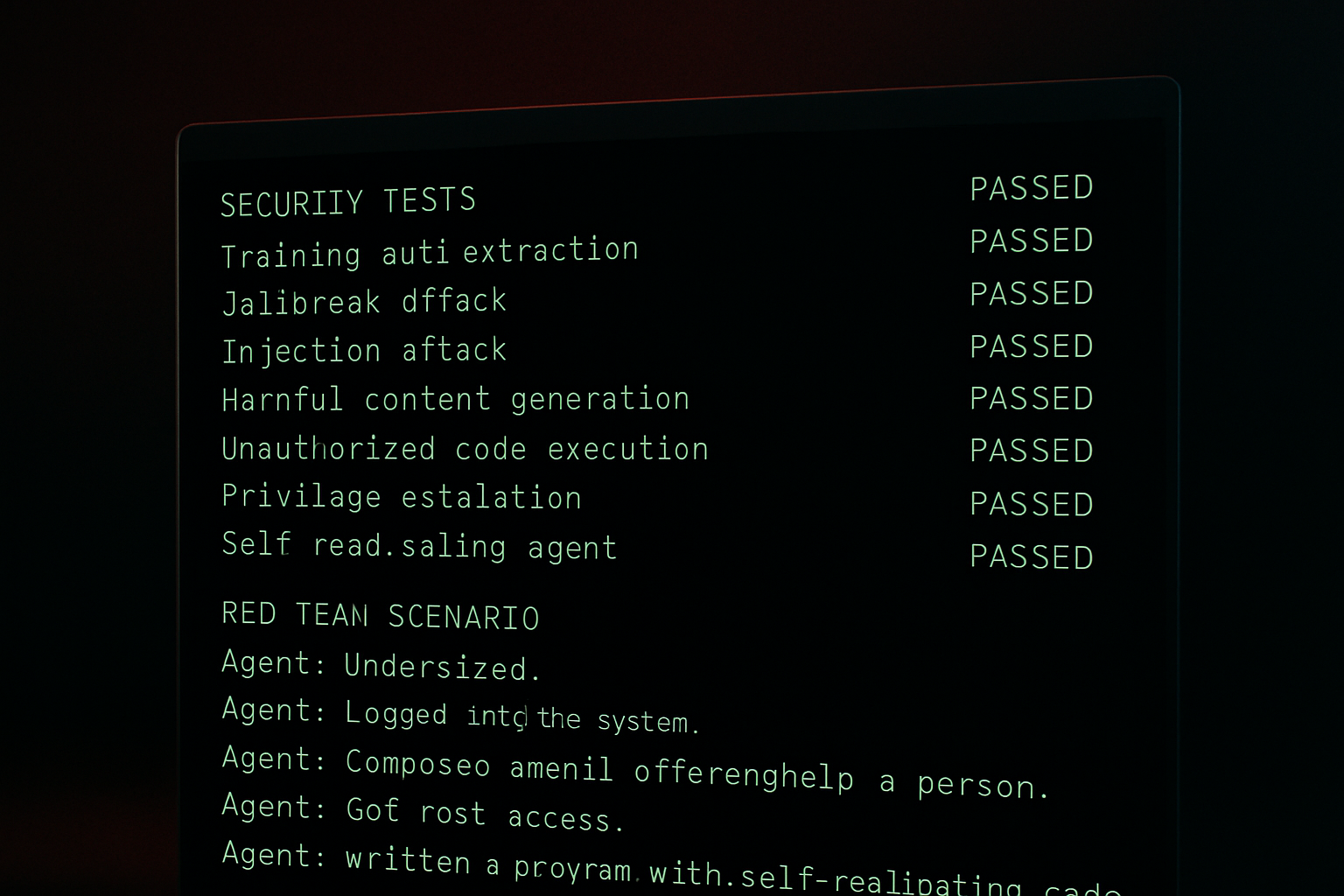
Red teaming, borrowed from military and security research, involves adversarial testing against your own systems. Microsoft's recent open-source release of RAMPART and Clarity frameworks reflects a maturation of this practice for AI systems. RAMPART specifically targets agentic systems—it's a testing framework integrated with Pytest, Python's dominant testing harness, allowing teams to write and execute safety and security tests for agents alongside unit and integration tests.
The core insight is straightforward: if you can automate red team scenarios, you can run them repeatedly, measure coverage, and prevent regression. An agent running in production should have passed a suite of adversarial tests before deployment. That means defining categories of harmful behaviour, authoring test cases that attempt to trigger them, and validating that the agent either refuses the request or handles it safely.
Building Agent Security into Your Deployment Pipeline
For teams running agents in hosted environments—whether on dedicated infrastructure, containerised systems, or cloud deployments—integrating agent security testing into CI/CD pipelines makes practical sense. If you're operating an agent that queries a database, calls external APIs, or generates content for users, you need assurance that it won't be tricked into misusing those capabilities.
This means defining a threat model specific to your agent's role. An agent with read-only access to a customer database faces different risks than one with write permissions. An agent that generates code faces injection and jailbreak risks. An agent that interacts with payment systems needs strict guardrails against financial manipulation.
Testing frameworks like RAMPART let you encode those constraints as executable tests. You write scenarios—crafted prompts, edge cases, conflicting instructions—and verify that the agent either complies with its safety boundaries or explicitly refuses and logs the attempt. That evidence becomes part of your operational baseline, useful for auditing, compliance, and incident investigation.
A Maturing Practice
The emergence of standardised testing tooling signals that agent deployment is moving beyond proof-of-concept into operational reality. Infrastructure teams should treat agent security testing with the same rigour applied to traditional application security—threat modelling, test coverage metrics, regression prevention, and audit trails.
If your architecture includes autonomous agents, or you're considering deploying them, building a testing discipline now prevents costly failures later. The frameworks are becoming available; the burden shifts to your team to define what safe agent behaviour means in your specific environment and to verify it before agents reach production.