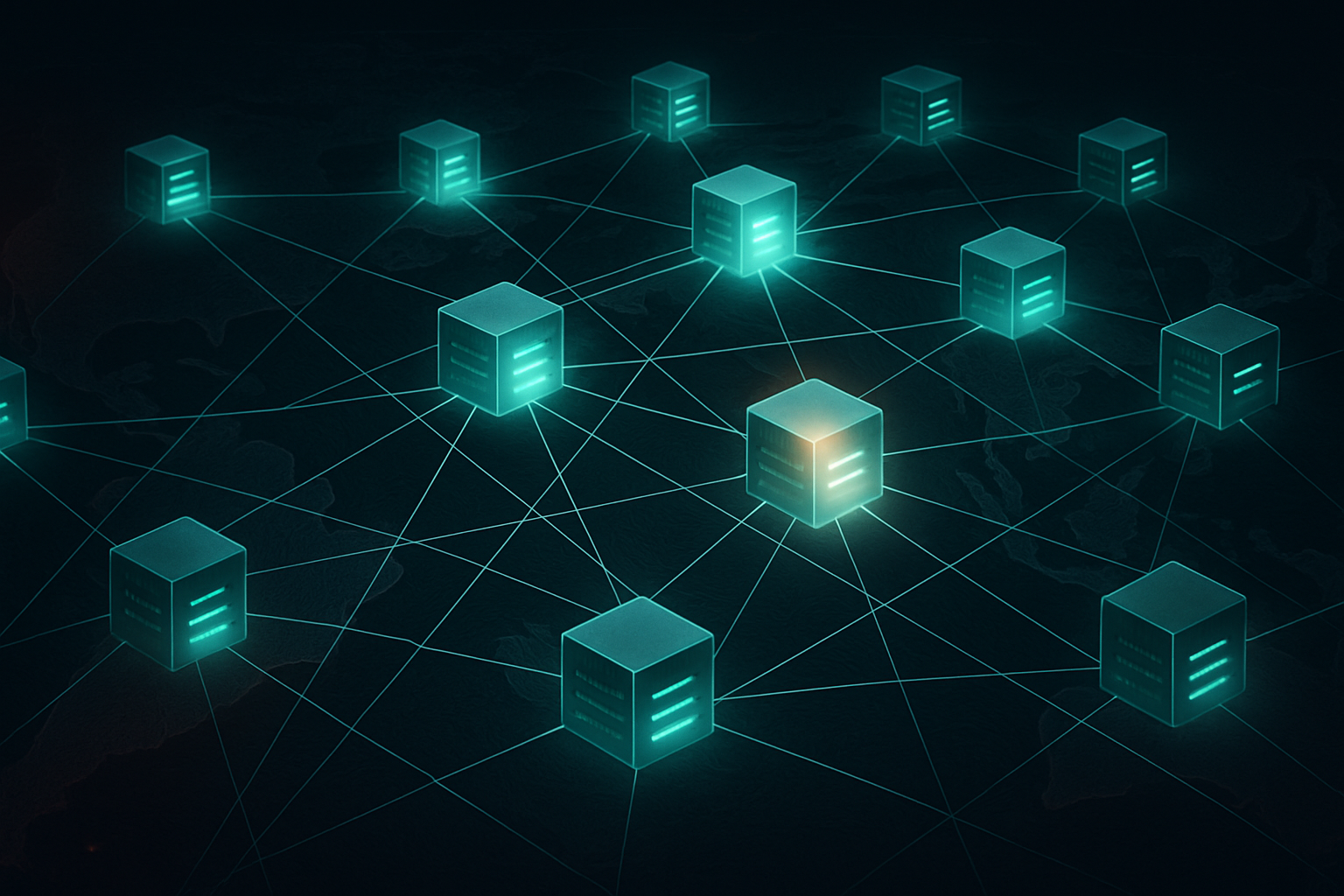
When a system is genuinely difficult to shut down, its infrastructure must be genuinely distributed. Tribler, a decentralized BitTorrent client developed over two decades at Delft University of Technology, offers a useful case study in how redundancy, peer-to-peer design, and self-replication can make digital infrastructure resistant to centralized control or legal takedown.
The Infrastructure Problem
Most distributed systems fail at the infrastructure layer. A peer-to-peer application might be clever in its protocol design, but if it relies on any central point—a tracker, a bootstrap server, a domain name—it has a chokepoint. Courts, regulators, and law enforcement target these points relentlessly. BitTorrent itself solved the tracker problem decades ago through DHT (distributed hash tables), but many implementations still depend on infrastructure that can be seized or blocked.
The self-replicating seedbox concept addresses this differently. Rather than assuming seed nodes will be static or known, the system is designed so that participating nodes themselves become seeds, reproducing the infrastructure as they replicate. This inverts the traditional model: instead of a few high-capacity servers feeding content to many clients, the network itself becomes the archive.
Architectural Redundancy in Practice
True resilience requires redundancy at multiple layers. A single seedbox, however powerful, remains a single point of failure. Multiple geographically distributed seedboxes eliminate that risk—but they must be coordinated without a central controller. Self-replication suggests that once a node joins the network and downloads content, it automatically becomes a source for that content, spreading availability organically.
This pattern has implications for how such systems choose their infrastructure partners. Nodes in such a network typically need to avoid jurisdictions where takedown requests are easily enforced, where ISPs routinely block traffic, or where legal liability for hosting flows easily upstream. Many peer-to-peer projects have gravitated toward offshore hosting providers or architectures that avoid centralised hosting altogether—instead relying on participants' own resources.
Design vs. Deployment Reality
The technical elegance of a self-replicating network doesn't guarantee it will work in practice. Real networks face latency, packet loss, and heterogeneous participant commitment. Some nodes vanish without warning. Bandwidth is finite. Seedboxes need reliable uptime, proper cooling, and protection against DDoS attacks—practical considerations that pure protocol design often glosses over.
Researchers working on such systems must solve mundane but critical problems: how to ensure seedboxes stay online despite ISP interference, how to handle cryptocurrency payments for hosting without relying on traditional payment processors, and how to keep the system functional even when some nodes are intentionally isolated by their governments or networks.
Lessons for Infrastructure Teams
The Tribler research illustrates why decentralized projects thinking long-term must treat infrastructure as a first-class design concern, not an afterthought. A protocol is only as resilient as the nodes that run it, and nodes need somewhere to run. Whether that's a bedroom server in a privacy-conscious jurisdiction, a dedicated machine in a datacenter with strong DMCA-ignored or DMCA-compliant policies, or a cloud instance paid for in cryptocurrency—the infrastructure choice shapes what the system can survive.
For teams building or deploying such systems, the implication is clear: redundancy must be architectural, not aspirational. Relying on 'the community will keep it alive' is a hope, not a strategy. Explicitly designing for distributed hosting, geographic spread, and the expectation that individual nodes will be hostile or unreliable is what separates systems that persist from those that collapse when one component is pressured.
Twenty years of development on a single research project, now funded through 2032, suggests that building truly resilient infrastructure takes time and sustained effort. The technical problem is solvable; the harder challenge is maintaining the infrastructure that keeps it running.