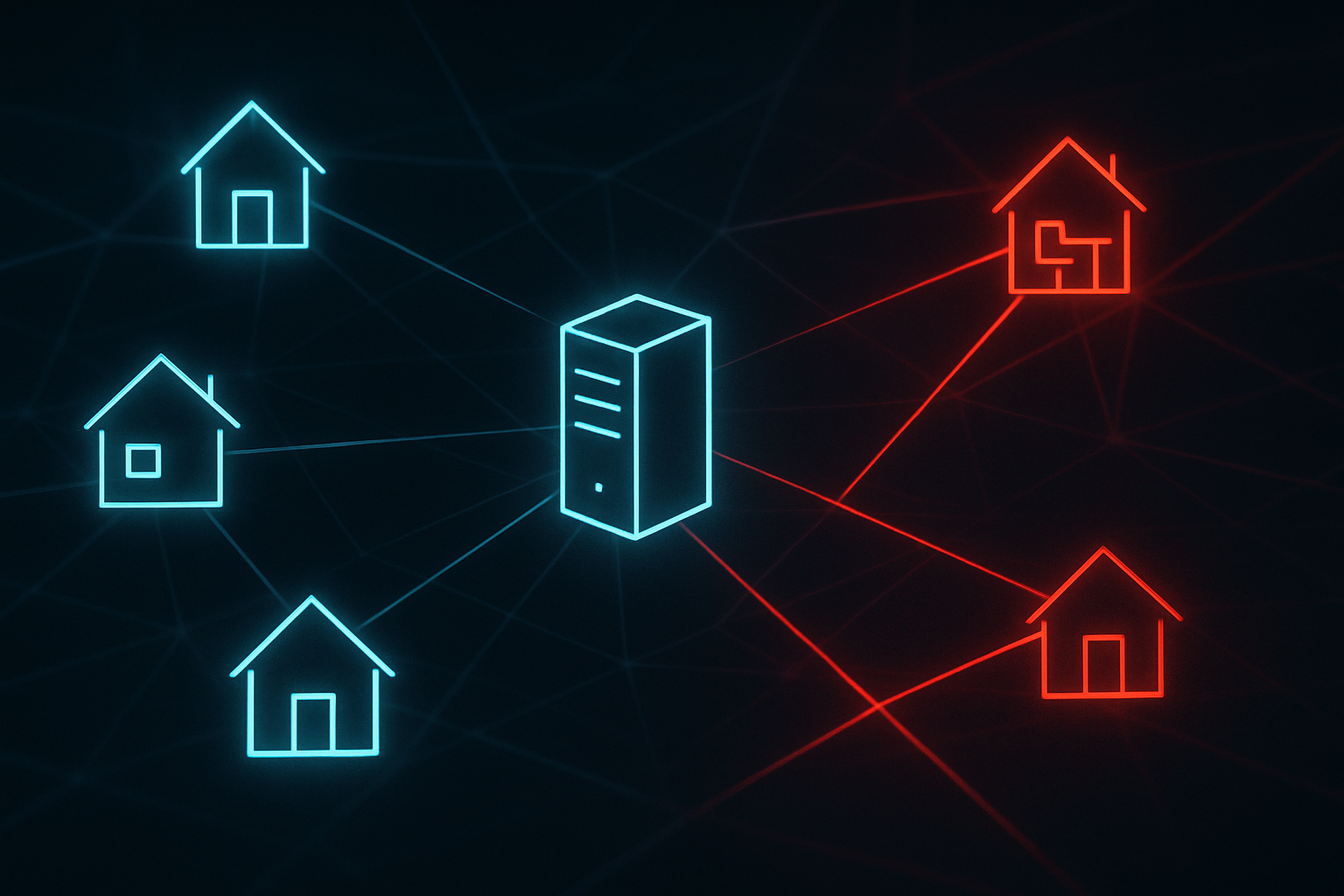
Last month, Google's Threat Intelligence Group announced the disruption of NetNut, a residential proxy network operating across approximately two million compromised home devices. Working with the FBI, Lumen Technologies, and other partners, Google degraded the network's usable device pool by millions—a significant blow to one of the internet's largest device-rental operations. The incident deserves scrutiny beyond the headlines, because it exposes how residential proxy networks operate at the intersection of user privacy, infrastructure abuse, and distributed threat infrastructure.
How Residential Proxies Become Infrastructure Weapons
Residential proxy networks operate by installing software on end-user devices—often without explicit informed consent—and routing traffic through those machines. From the network operator's perspective, this creates a distributed relay infrastructure. From the infrastructure security standpoint, it's a de facto botnet that fragments abuse across millions of consumer IP addresses, making detection and blocking extraordinarily difficult.
The appeal to bad actors is obvious. A request routed through a residential IP—someone's home internet connection—appears legitimate to many security filters. It bypasses IP-based geolocation blocking, evades rate-limiting systems that trust residential ranges, and obscures the true source of malicious traffic. These networks have been used for credential stuffing, account takeover attacks, ad fraud, scraping, and bypassing content protection systems.
For hosting operators and infrastructure teams, residential proxy networks create an asymmetric problem. Traditional DDoS mitigation focuses on source IP reputation and volumetric patterns. When attack traffic is distributed across millions of residential IPs, many of them legitimate home connections only briefly compromised or rented out by their owners, conventional blocking becomes a blunt instrument that risks false positives.
The Takedown Mechanics and What Worked
Google's disruption of NetNut—also tracked as Popa by security researchers—relied on a combination of law enforcement coordination, infrastructure partner cooperation, and likely direct intervention at multiple choke points. Rather than simply blocking suspect IPs (a temporary measure), the operation targeted the network's command infrastructure and the mechanisms that kept devices enrolled in the proxy pool.
This matters technically because it suggests the disruption was precision-targeted at the network's operational backbone rather than a broad-stroke ban. That approach is harder to execute than it sounds. It requires identifying command servers, understanding enrollment mechanisms, correlating device behaviour across multiple vantage points, and timing actions to prevent rapid reconstitution. The involvement of Lumen—which operates significant portions of the internet's backbone—indicates the takedown touched core infrastructure points where proxy traffic was being aggregated or routed.
Implications for Infrastructure Operators
For teams managing hosting, content delivery, or authentication systems, residential proxy disruptions have immediate practical meaning. When a major proxy network goes down, traffic patterns shift. Some legitimate users whose ISPs were rented into proxy pools may see temporary access issues as those devices are re-enrolled elsewhere. More importantly, attackers adapt—they migrate to smaller, newer proxy networks or shift tactics altogether.
The broader lesson is that residential proxy networks are ultimately supply-chain compromises. They succeed because consumer devices are insufficiently segmented, because user consent and awareness are minimal, and because residential IP space is cheap and difficult to police at scale. Defending against them requires more than reactive blocking. It requires understanding which traffic patterns are genuinely residential, which are proxied, and what acceptable risk looks like when a legitimate home user's connection has been rented out without their knowledge.
Infrastructure teams should expect ongoing cat-and-mouse cycles. Residential proxy networks have proven too profitable to disappear entirely, even after major takedowns. Smaller operators, less visible networks, and newer services will continue to operate. The security value of Google's disruption isn't permanent elimination—it's demonstrating that these networks can be degraded at scale, and that law enforcement and infrastructure partners can coordinate effectively when the stakes are high enough.
The Persistent Challenge
Ultimately, residential proxy networks exist because they're technically difficult to stop and economically difficult to prevent. As long as home devices lack strict network segmentation and as long as their IP addresses are valuable for evading detection, operators will find ways to recruit them. The takedown of NetNut was a win for infrastructure security, but it's a battle in a longer conflict between defenders trying to keep networks clean and those who profit from turning consumer devices into relay infrastructure.