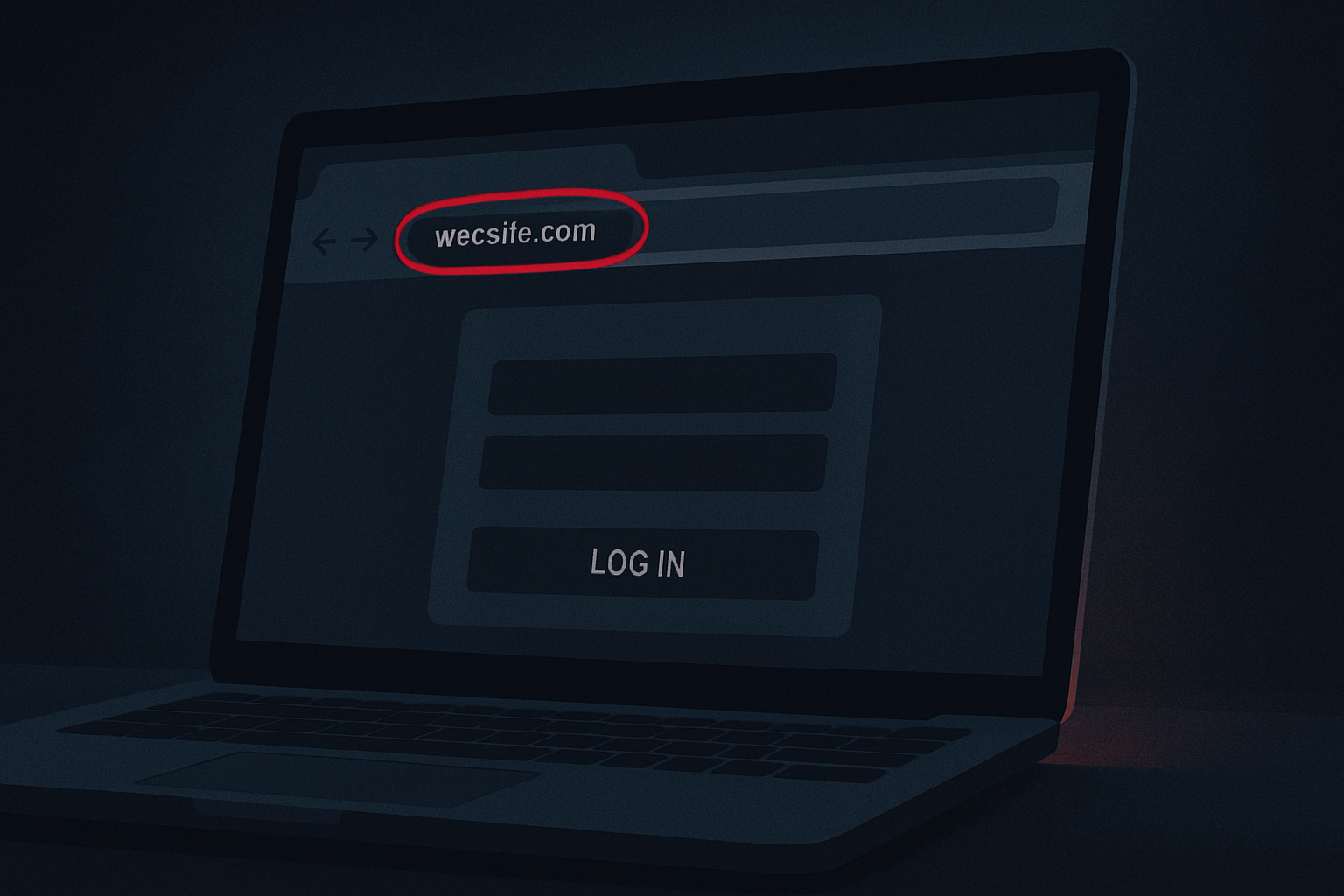
A sustained phishing campaign attributed to BlueNoroff, the threat group linked to North Korean state interests, is actively impersonating Zoom and Microsoft Teams through typosquatted domains. Unlike generic phishing campaigns, this operation includes a profiling stage designed to identify targets holding cryptocurrency assets before delivering malware payloads. The sophistication lies not in the malware itself, but in the social engineering workflow that precedes it.
The attack chain: trust abuse at scale
The campaign operates on a simple but effective premise. Attackers register domains that closely resemble legitimate Zoom and Teams URLs—such as zoonm.us or teams-meetings.com—then send phishing messages that appear to come from industry contacts. Victims who click through land on convincing replicas of the official login pages. Rather than immediately harvesting credentials and moving on, the phishing kit includes a profiling stage that gathers information about the target's system and behaviour.
Once a user has entered their credentials, they are presented with additional prompts requesting wallet information or backup phrases. This is where the operation diverges from mass-market phishing. The attackers are specifically interested in users who demonstrate access to cryptocurrency holdings. Targets who pass this screening receive malware; those without significant wallet balances are often left alone, reducing noise and forensic traces that might trigger detection systems.
Why typosquatting remains effective
Domain typosquatting exploits the cognitive gap between what users think they typed and what actually happens in the browser. A user rushing through a Slack message or email will often not notice the difference between zoom.us and zoonm.us, especially if the page design is pixel-perfect. This is not a sophisticated zero-day attack; it is a discipline problem in user attention and corporate security awareness.
The persistence of this tactic reflects a harsh reality: it works. Even security-conscious organisations struggle to prevent employees from visiting spoofed login pages when the phishing message appears to come from a trusted colleague. According to security researchers tracking the campaign, the attackers have maintained operational continuity by rotating domains and slightly modifying landing pages to evade URL filtering and reputation checks.
The cryptocurrency targeting angle
What distinguishes this campaign from earlier phishing efforts is the explicit focus on cryptocurrency holders. BlueNoroff's interest in crypto wallets is well-documented, with previous attacks targeting blockchain engineers and exchange employees. This phishing kit represents an evolution toward lower-friction compromise of retail holders and service providers.
A user who has already provided their Zoom credentials will often be more cooperative when asked for wallet-related information—the attacker has established apparent legitimacy. The request for seed phrases or private keys, presented within a compromised session, carries psychological weight. Combined with social engineering that references a recent video call or team meeting, the success rate justifies the operational overhead.
Defensive implications for hosting providers and enterprises
For infrastructure operators and enterprise security teams, the attack pattern suggests several hardening measures. Email filtering rules should flag messages containing suspicious domain lookalikes, especially when they request login credentials or sensitive data. Browser security extensions that verify domain WHOIS records and flag newly registered domains can reduce successful phishing clicks, though determined users will still bypass warnings.
More fundamentally, organisations should implement multi-factor authentication on all platforms, including Zoom and Teams accounts. A stolen password, even one obtained through a phishing kit, becomes less useful if the attacker cannot complete the second authentication factor. For cryptocurrency-related operations, hardware wallets and offline key storage remain the most reliable defence against compromised credentials leading to asset loss.
The BlueNoroff operation also underscores the value of threat intelligence sharing within industry sectors. Hosting providers and domain registrars who detect patterns of typosquatted domain registration and phishing page hosting can accelerate takedowns and alert potential targets.
Phishing remains effective because it targets the weakest link in any security architecture: human attention and trust. When that trust is misdirected toward a convincing fake, even technically sophisticated users can be compromised. The profiling stage in this campaign reveals that attackers are increasingly selective, optimising for high-value targets rather than spray-and-pray volume. That shift requires defenders to move beyond generic awareness training toward context-aware authentication and zero-trust credential policies.