
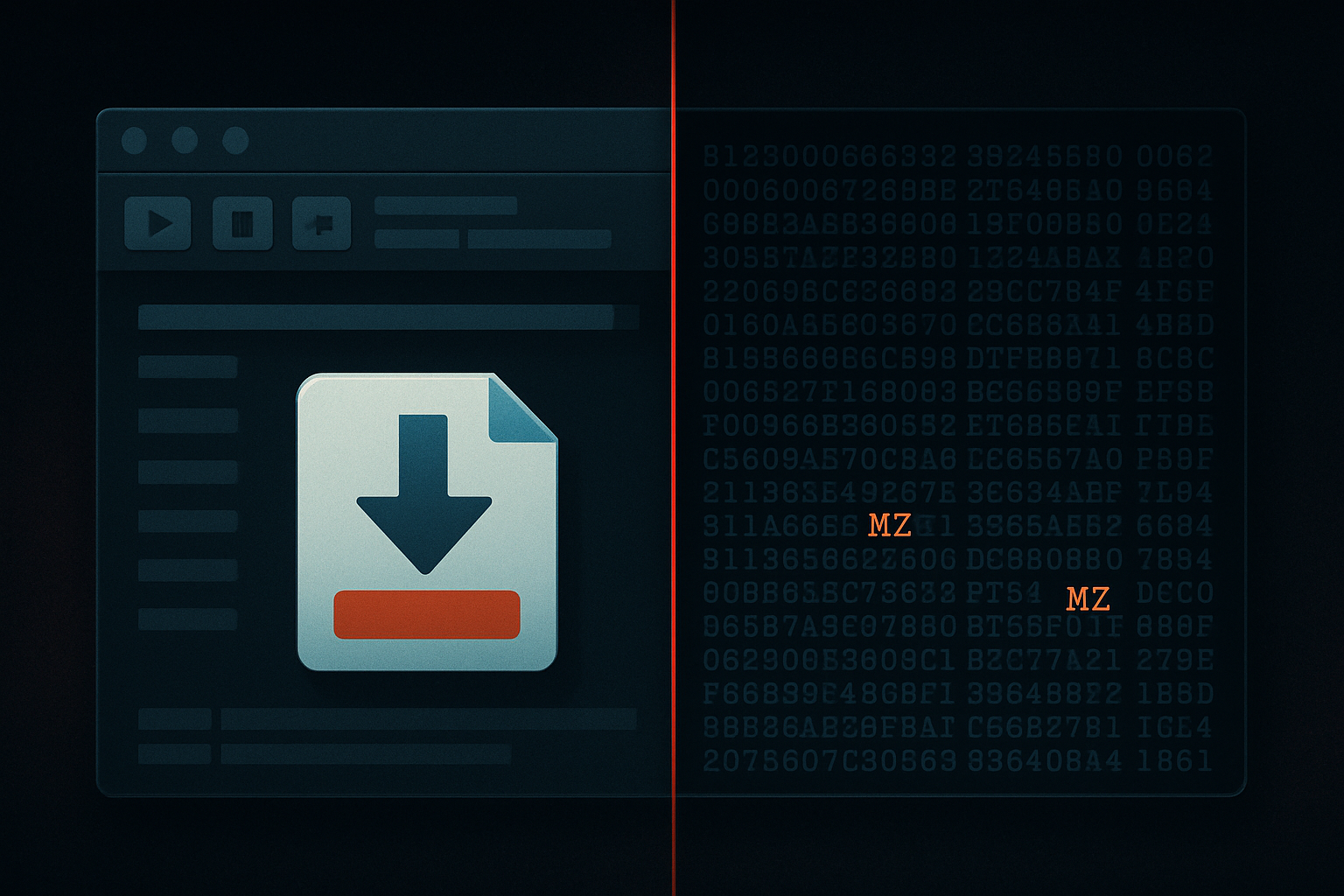
Torrent networks remain a significant malware distribution channel, not because torrenting itself is inherently unsafe, but because the decentralised nature of torrent swarms creates inspection difficulties that operators exploit. Recent analysis of torrent site data reveals a recurring pattern: attackers bundle malicious executables with popular legitimate applications, relying on user inattention and weak file verification to spread their payloads.
The Wrapping Technique and Why It Works
The classic approach involves packaging a legitimate application—VLC media player being a recurring example—alongside a malicious executable disguised as an installer, update, or codec library. When users download the torrent, both files arrive in the same archive or directory structure. Operating system associations and user behaviour often favour the legitimate-looking binary, particularly if it's placed first alphabetically or given a deceptive filename like "vlc-setup.exe" or "codec-installer.msi".
Why this method persists involves both technical and human factors. Torrent clients do not perform content analysis by default. Many users do not verify file hashes or inspect archive contents before execution. The torrents themselves often source from multiple peers, making it difficult for either torrent sites or users to verify the entire contents before seeding begins.
Detection Challenges for Torrent Infrastructure
Operating a torrent site—or maintaining any content platform exposed to malware distribution—requires distinguishing between legitimate torrents and those carrying payloads. File signature matching catches obvious threats, but attackers respond by obscuring or encrypting payloads, compressing archives, or splitting malicious content across multiple files within a single torrent. Recent attempts to apply automated content inspection to torrent internals suggest the scale of the problem has finally prompted systematic technical responses.
For hosting and infrastructure operators, this creates practical considerations. Torrent tracker operations face potential abuse complaints, DMCA takedowns, and malware reports that require rapid response. Bandwidth-heavy services that might host torrent trackers or indexing infrastructure need to understand whether content filtering at the network level is feasible or, in jurisdictions where it's permitted, necessary.
Implications for Content Verification
The difficulty lies in scale. Manually inspecting torrent contents is labour-intensive. Automated systems using machine learning or signature-based detection can flag obviously malicious binaries, but sophisticated attackers adapt quickly. Polymorphic payloads, fileless execution techniques, and staged delivery—where a small dropper downloads the actual malware post-execution—circumvent static analysis.
Torrent sites attempting to maintain some legitimacy increasingly implement user reporting mechanisms, community moderation, or automated scanning against known malware databases. None of these approaches is foolproof, and each introduces cost and latency. Sites operating in jurisdictions with minimal legal pressure often skip these measures entirely.
Broader Network and Hosting Implications
For infrastructure operators, the lesson is clear: torrent networks will continue serving as malware vectors until either client-side verification becomes ubiquitous (unlikely) or distribution methods shift (already happening via direct downloads and peer-to-peer applications). Hosting providers handling torrent traffic, particularly those offering DMCA-flexible or privacy-oriented services, should expect increased notification volume and prepare systems to respond proportionately to legitimate abuse reports without disrupting service for lawful users.
The wrapping technique also highlights why generic content filtering often fails. A torrent containing a legitimate application plus a trojan is not obviously malicious from a network perspective—both files may possess valid signatures, appear in antivirus whitelists, or originate from reputable sources. Detection requires deeper inspection: unpacking, analysing file relationships, and understanding execution context.
As automated detection tools improve, malware distribution will adapt. Infrastructure operators managing content platforms should treat this as an ongoing arms race rather than a solvable problem, implementing graduated responses proportionate to the threat level and maintaining clear policies around content responsibility.


