In July 2026, two members of the Scattered Spider group received five-and-a-half-year sentences for orchestrating the 2024 ransomware attack on Transport for London. The incident disabled 148 systems and forced all 27,000 employees to reset credentials in person—a dramatic demonstration of how ransomware can cripple large-scale operations. Beyond the headlines, the attack offers infrastructure teams concrete lessons about the architectural and procedural weaknesses that enabled such extensive disruption.
Why 148 Systems Fell in Sequence
The scale of the compromise suggests a critical architectural problem: insufficient network segmentation. If 148 distinct systems across a transport authority could be disabled simultaneously or in rapid succession, it points to either a flat network topology or inadequate isolation between operational technology (OT) and information technology (IT) boundaries. Scattered Spider typically exploits initial access through credential theft or social engineering—but the subsequent spread across so many systems indicates the attacker encountered minimal lateral movement friction once inside the perimeter.
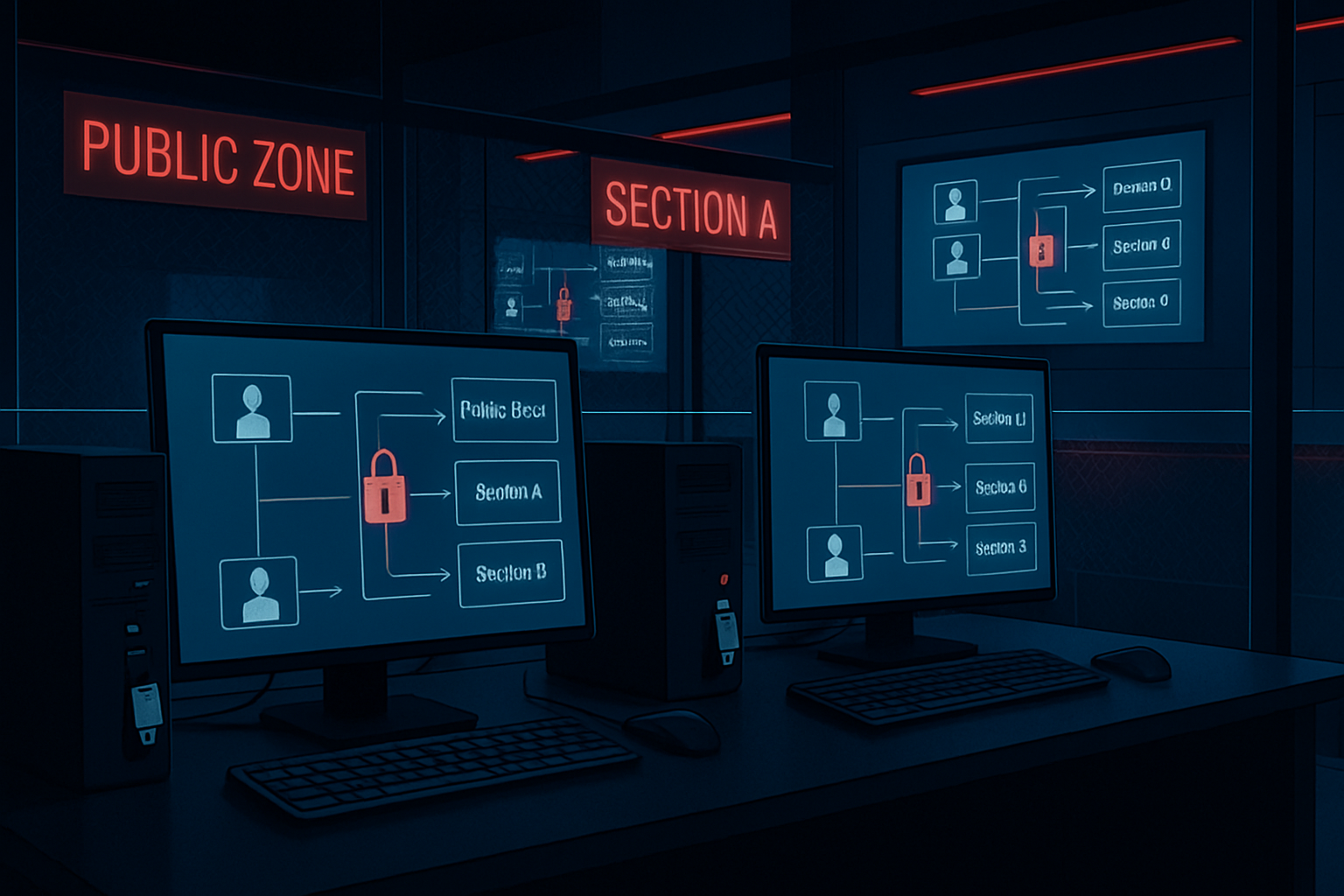
TfL's infrastructure almost certainly includes multiple security domains: fare collection systems, signalling networks, staff systems, customer-facing platforms, and internal services. A well-architected environment would enforce strong boundaries between these, requiring re-authentication and explicit trust relationships at each layer. The fact that a single compromise propagated to 148 systems suggests those boundaries either didn't exist or were trivial to cross. This is a common finding in post-breach forensics of large organisations—the initial foothold is often less interesting than the complete absence of internal architectural controls.
Credential Reset as a Forced Workaround
The decision to bring all 27,000 employees into offices for in-person password resets reveals something equally important: the scale of credential compromise. If passwords could be reset remotely and verified through existing secure channels, that would have been the response. The in-person requirement suggests either that the authentication systems themselves were compromised or that the organisation had no confidence in the integrity of their remote identity verification mechanisms. From a business continuity standpoint, this is a catastrophic failure state—it means recovery from the incident required physical coordination on an enormous scale.
This also points to potential weaknesses in multi-factor authentication (MFA) deployment. If hardened MFA—particularly hardware security keys or time-based OTP not accessible to the attacker—had been mandatory across all staff accounts, the damage would have been severely constrained. The attacker could have gained initial access but would have faced a hard stop when attempting to move laterally or maintain persistence.
The Scattered Spider Operational Model
The sentencing of the two individuals responsible underscores that Scattered Spider operates through persistent, hands-on intrusion rather than automated worms or mass exploitation tools. This group typically uses phone-based social engineering, impersonation, and custom credential harvesting—tactics that require intelligence gathering and human interaction. Infrastructure teams often assume attackers are automated or remote, but Scattered Spider's approach means they're willing to invest time in reconnaissance, maintain interactive sessions, and adapt tactics in real time.
The implication for defenders is clear: perimeter defences alone are insufficient. The group will find ways through firewalls if the endpoint security, identity layer, and internal architecture are weak. Ransomware groups like this profit from scale and speed, but they're ultimately limited by the same constraints as any attacker—they need valid credentials, working code execution paths, and time to encrypt data before detection.
Defensive Priorities for Large Infrastructure Operators
Organisations managing critical infrastructure or large employee populations should prioritise three hardening vectors based on the TfL incident. First, enforce strict network segmentation with zero-trust principles between domains. Second, mandate strong MFA on all administrative and high-privilege accounts, with hardware security keys preferred over TOTP where feasible. Third, maintain robust backup infrastructure physically and logically isolated from production systems—encryption-resistant backups are not optional for organisations of TfL's scale.
Equally important is incident response planning that assumes the worst: full credential compromise and the potential need to reset authentication at scale. Pre-positioning secure recovery channels, testing them regularly, and planning for the logistics of mass credential resets will reduce the chaos and physical coordination burden if compromise occurs.
The TfL attack was not a sophisticated zero-day incident or a state-sponsored operation. It was methodical social engineering, followed by exploitation of weak internal architecture and authentication controls. Those failures are replicable and preventable—but only if organisations view their infrastructure as an attacker would: as a series of segmented domains that each require independent trust verification, not as a monolithic network where one breach becomes a platform for mass compromise.