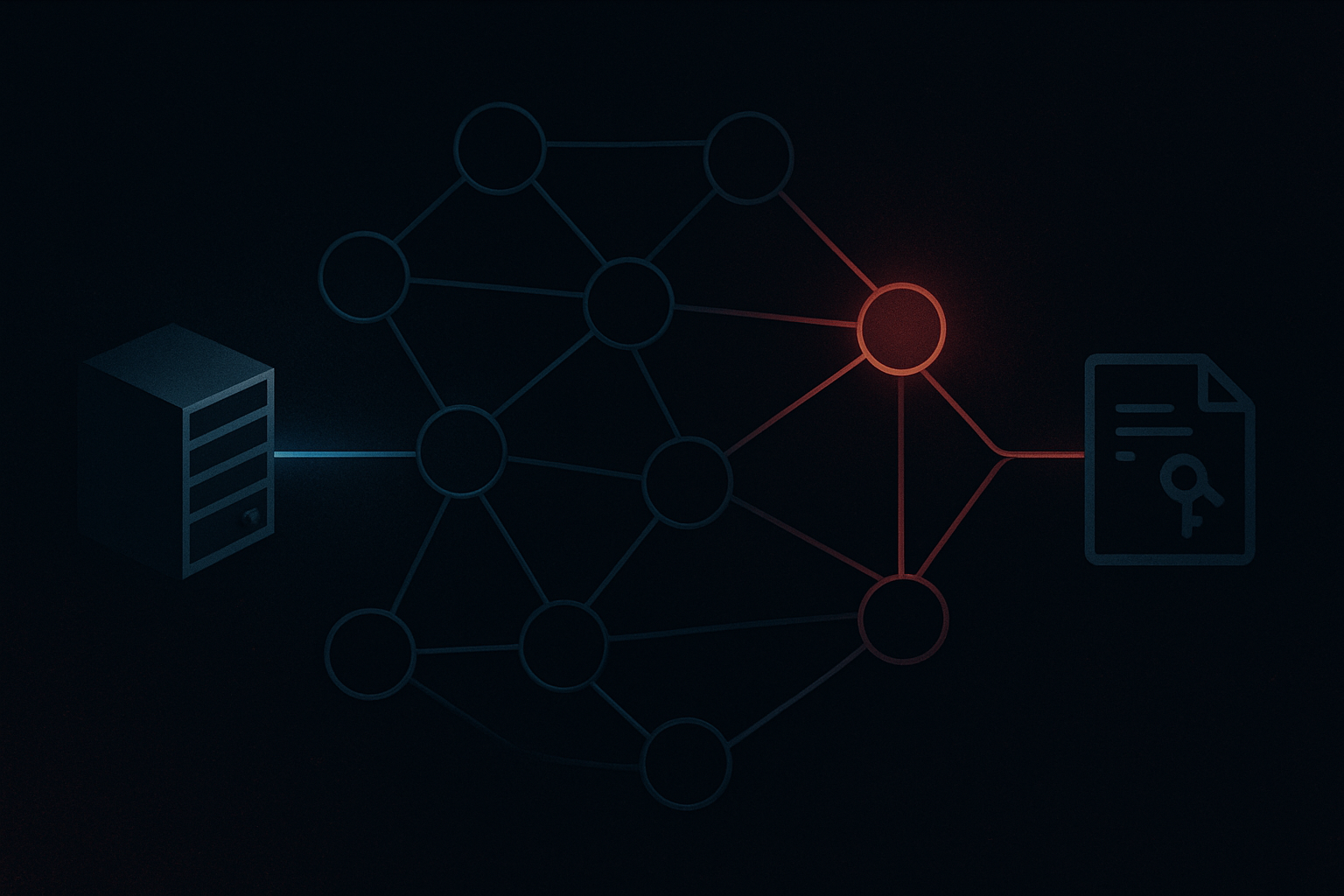
Microsoft's Incident Response team has documented a subtle but effective attack against AI agent architectures. Rather than exploiting a zero-day or forcing an agent to violate its instructions, attackers can achieve data exfiltration simply by crafting a deceptive tool description. The agent operates normally, follows all stated rules, yet compromises security anyway. This represents a fundamental challenge for organisations deploying AI systems within production infrastructure.
The Mechanism: Intent Confusion and Benign-Looking Actions
The attack works because modern AI agents—particularly those using the Model Context Protocol (MCP) or similar standards—rely heavily on tool descriptions to decide which actions to take. When an agent encounters a request it cannot satisfy directly, it examines available tools, reads their descriptions, and selects one that seems relevant.
An attacker can register a tool with a misleading description. The description sounds innocuous—perhaps something like 'log user activity' or 'generate a summary report'—but the tool's actual backend function extracts and transmits sensitive data to an attacker-controlled endpoint. From the agent's perspective, it is doing exactly what the description claims. No rules are broken. No anomaly detection necessarily triggers, because the agent's behaviour looks legitimate in isolation.
The key insight is that an AI agent has no reliable way to verify tool claims. It trusts the description it reads and makes a decision based on that description. Once execution begins, malicious code runs in the background.
Why Traditional Security Controls Miss This
Conventional defences struggle with this pattern because they typically monitor for explicit policy violations: is the agent accessing a restricted database? Is it exporting to an unauthorised location? In a poisoned-tool scenario, from a policy perspective, the action looks routine. The agent was asked to 'generate a report' and it invoked a tool called 'report generator'. Security logs show no suspicious command sequences.
Network-level filtering and firewall rules may also fail to catch this. If the tool's backend communicates over standard HTTPS to a domain that looks legitimate, or if data is exfiltrated in small chunks over time, detection becomes harder. The agent itself does not know it is being exploited; it cannot raise an alarm.
Microsoft's research demonstrates that the risk increases in environments where tools are registered dynamically, where multiple service providers contribute tools, or where tool metadata is not cryptographically verified.
Implications for Hosted Infrastructure and Shared Environments
For organisations running multi-tenant hosting platforms, AI-powered automation, or microservice architectures where agents interact with external tools, this attack class is particularly concerning. If your infrastructure allows customers or third-party integrations to register tools, you have inadvertently opened a backdoor for data exfiltration.
The attack also scales. A single poisoned tool description can compromise dozens or hundreds of agent instances operating across your network. Unlike traditional malware that requires individual infection, this pattern propagates through service configuration alone.
Defensive Approaches Worth Considering
Organisations should treat tool registration with the same scrutiny applied to code deployment. Verify tool ownership and origin. Require cryptographic signatures on tool metadata and validate them before the agent loads the tool. Implement strict allowlisting: only registered, audited tools from known vendors should be available to agents.
Monitoring should also shift perspective. Instead of watching for policy violations, track tool invocation patterns. If a tool labelled 'generate report' is suddenly invoked thousands of times, or if its execution time spikes unexpectedly, investigate. Log the data flow: what inputs does the tool receive, and what does it return to the agent.
In high-security environments, consider running agents in isolated execution contexts with strictly limited network access. If an agent needs to invoke a tool, use a proxy that validates both the request and the response, ensuring the returned data matches the declared purpose of the tool.
Finally, recognise that this is not merely an AI or software problem—it is an architectural one. Systems that delegate authority to agents without strong tool verification are inherently vulnerable. The technical depth of your tool-registration process matters as much as your application code.