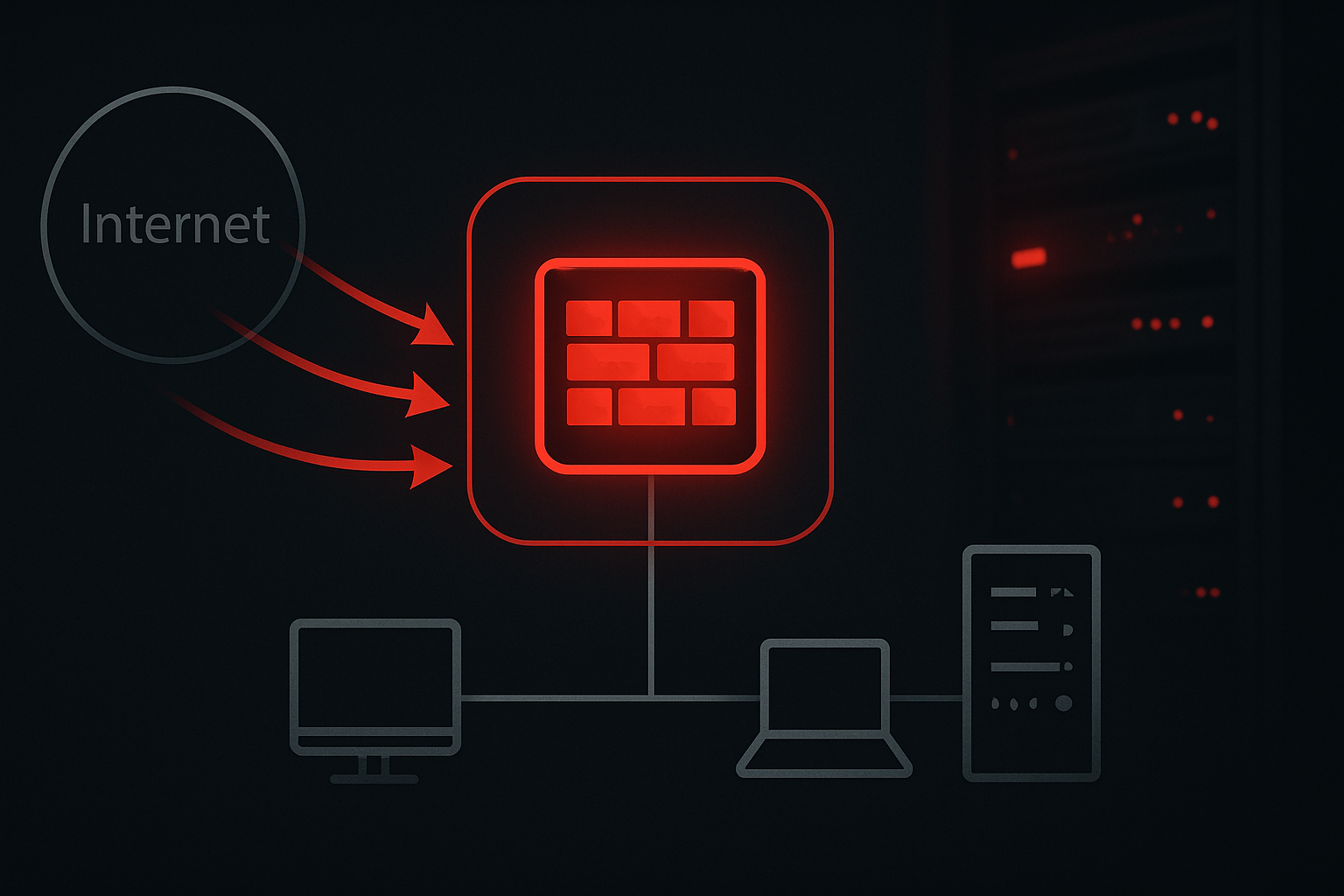
When a firewall is compromised, the boundary between your internal network and the outside world collapses. The FortiBleed campaign, active since early 2026 and reported across the security community, demonstrates how attackers have systematically harvested credentials from over 430,000 FortiGate installations worldwide. The operation reveals a methodical approach to gaining initial access—one that should concern anyone responsible for network perimeter security.
The Attack Chain: From Reconnaissance to Credential Theft
The campaign operates on a straightforward but effective principle. Russian-speaking initial access brokers scan for exposed FortiGate management interfaces, then conduct credential brute-forcing against accessible systems. Once a foothold is established, they collect account credentials and compile lists for sale or deployment in downstream attacks. The operation is financially motivated and industrial in scale—over 430,000 devices flagged represents a significant portion of FortiGate deployments globally.
What makes this campaign notable is not a novel zero-day vulnerability. Instead, the attackers exploit configuration weaknesses and weak credential hygiene that remain common despite years of security awareness. Unpatched systems, default credentials, and management interfaces exposed to the public internet create a shallow entry ramp for opportunistic adversaries.
Why Firewall Compromise Matters at Infrastructure Scale
A firewall sits at the perimeter of your network topology. When compromised, it becomes an adversary's outpost—a trusted device positioned to inspect, redirect, or intercept all traffic between your systems and the wider internet. An attacker with administrative access can:
- Harvest credentials for internal systems and services
- Redirect traffic to man-in-the-middle positions
- Deploy persistent backdoors across the network
- Establish C2 (command-and-control) channels disguised as legitimate traffic
- Monitor encrypted communications by intercepting certificates and keys
For hosting operators, datacenter providers, and infrastructure managers, this translates to a potential compromise of customer data and service integrity. The credentials harvested from FortiGate systems often grant access to internal management networks, backup systems, and downstream services—a privilege escalation path that can lead to lateral movement across entire environments.
Defensive Posture: Management Interface Hardening
The FortiBleed campaign underscores several practical hardening measures that have remained effective for years:
- Network segmentation for management traffic. Administrative access to firewalls should never be exposed to the public internet. Restrict management interfaces to internal network ranges or use a bastion host and SSH/VPN tunnel for remote access.
- Strong authentication and rotation. Replace default credentials immediately. Implement multi-factor authentication on administrative accounts. Rotate service credentials regularly, particularly for shared or legacy accounts.
- Patch cadence. FortiGate releases frequent security updates. Establish a process for testing and deploying firmware updates within 30 days of release. Zero-day risks are real, but unpatched systems are a known risk.
- Logging and monitoring. Enable comprehensive logging of administrative access and configuration changes. Monitor for repeated failed login attempts, which often precede successful brute-force attacks. Correlate firewall logs with threat intelligence feeds.
- Network telemetry. Monitor outbound connections from the firewall itself. A compromised management interface may attempt to exfiltrate credentials or establish C2 channels; unusual egress traffic is a common signal.
Operational Perspective: Risk Assessment Beyond the Patch
The FortiBleed campaign has persisted for months because patching alone does not guarantee safety if the management interface was previously reachable and weak credentials were already in use. If your FortiGate systems are hosted in a colocation facility or managed hosting environment, verify with your provider that administrative interfaces are properly segmented and not exposed to transit networks or customer-accessible ranges.
Credential harvesting campaigns like this one are often precursors to more targeted attacks. Once credentials are compiled and sold on dark markets or used by downstream threat actors, the timeline for exploitation shortens. Assume that if your FortiGate was scanned during the campaign window (February 2026 onward) and is still running weak credentials, credentials may already be in use elsewhere.
Infrastructure security remains a game of consistent fundamentals: segregate management traffic, enforce strong authentication, keep systems patched, and maintain visibility into administrative access. The FortiBleed campaign succeeds because too many deployments still neglect these basics. That advantage will persist until operators treat firewall management as a critical security boundary, not a convenience interface.