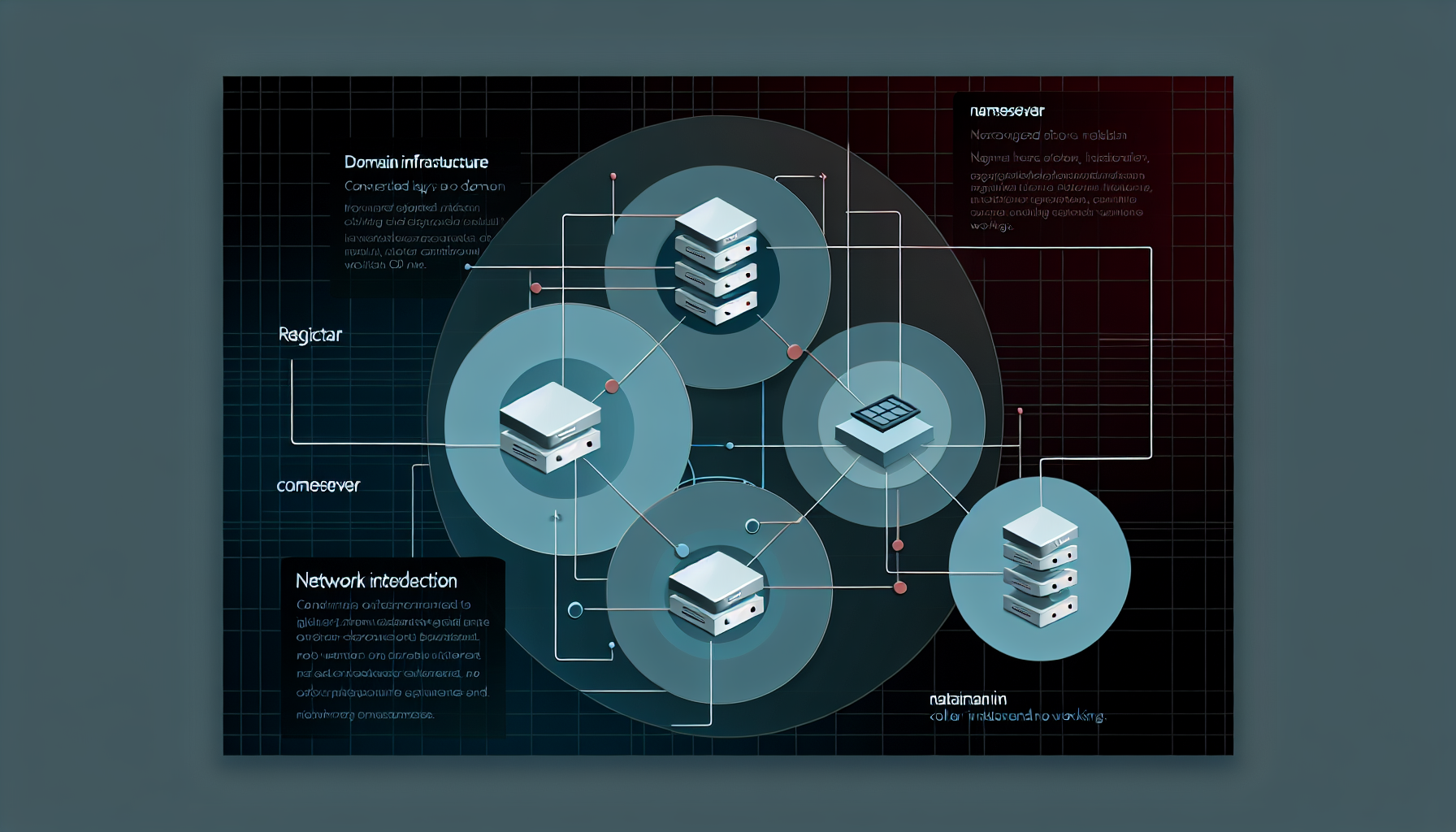
Takedown orders against distributed services rarely arrive in isolation. When rights holders pursue copyright disputes, their legal strategies increasingly target not just the operators of a service, but the entire supply chain that makes it accessible—registrars, hosting providers, CDN operators, DNS providers, and payment processors. A recent case involving a shadow library illustrates both the ambition and the constraints of this approach.
The Scope of Modern Takedown Orders
The proposed injunction in this dispute names over twenty entities, spanning international domain registries, hosting providers, and infrastructure companies. The intent is clear: make it technically impossible for users to locate or access the targeted domains by severing their connection to the DNS system, removing their hosting, and cutting off financial rails.
This multi-point-of-interdiction strategy reflects a shift in how copyright holders approach online enforcement. Rather than pursuing the service operator alone—often a futile exercise if they operate from a jurisdiction indifferent to US copyright law—the strategy is to make the service unprofitable or inaccessible by removing its dependencies.
The named defendants typically include registrars (entities that manage domain name records), hosting providers across multiple jurisdictions, and infrastructure operators like content delivery networks. The assumption is that simultaneous compliance across all these points will render the service unreachable.
Compliance Challenges and Jurisdictional Friction
In practice, executing such orders reveals significant technical and legal complications. A US court order carries legal weight primarily within US jurisdiction. For registrars and hosts based elsewhere, compliance becomes a choice rather than a legal obligation—one that depends on their business model, jurisdiction, and risk tolerance.
Some registrars and infrastructure providers operate explicitly on a principle of minimising government requests and takedown demands. Others, particularly those with substantial US business interests, may prioritise compliance. This fragmentation means that even with a comprehensive court order, enforcement remains uneven.
Consider the technical realities. Domain registries operate under contracts with ICANN and their respective ccTLD authorities. An order targeting a .xyz registrar operates differently from one targeting a .com registrar, which operates under different contractual and regulatory frameworks. Similarly, hosting providers in jurisdictions with robust privacy protections or regulations hostile to copyright enforcement may resist or delay compliance.
The order itself must also be technically specific enough to be executable. It's not sufficient to say "block this domain"—operators need clear instructions about which DNS records to modify, which IP addresses to revoke, and how to handle existing traffic. These details determine whether compliance is straightforward or requires significant infrastructure changes.
The Economics of Resilience
From the operator's perspective, resilience against takedown orders has become a design consideration. Services that anticipate such action often pre-register multiple domains across different registries and jurisdictions. They may use privacy-protecting registrars that resist pressure. They may rely on decentralised infrastructure, peer-to-peer protocols, or mirroring across multiple hosts in different legal zones.
The specific case demonstrates this dynamic: the target is reported to operate across multiple domains, presumably anticipating partial takedowns. Each time one domain is seized, others remain available, though with reduced discoverability.
This arms race between enforcement and resilience shapes infrastructure decisions. Hosting providers must decide whether to implement the technical infrastructure to respond to takedown orders quickly, maintain detailed logging to demonstrate compliance, and potentially face liability if they're slow or negligent. Registrars must weigh the cost of maintaining sophisticated compliance systems against the revenue from customers who may resist or evade such orders.
The Judgment Question
The $19.5 million judgment component of the case raises a separate issue. Default judgments—issued when a defendant fails to appear in court—are legally valid but often uncollectable, particularly against operators in non-cooperative jurisdictions or operating under anonymity. The real leverage lies in the injunction, which targets third-party service providers rather than attempting to extract damages from an operator who may be judgment-proof.
This explains why modern copyright enforcement has shifted focus. Monetary judgments alone rarely deter or disable services. Injunctions that break the technical supply chain are far more effective—assuming compliance can be achieved across all named defendants.
The broader implication is that infrastructure providers—registrars, hosts, CDNs, and payment processors—have become the de facto enforcers of copyright law. Their compliance decisions determine whether services remain accessible, regardless of the merits of underlying disputes or the jurisdiction in which they operate. This concentration of enforcement power in infrastructure layers, rather than directly against operators, reflects the reality that technical gatekeeping is often more effective than legal liability.