
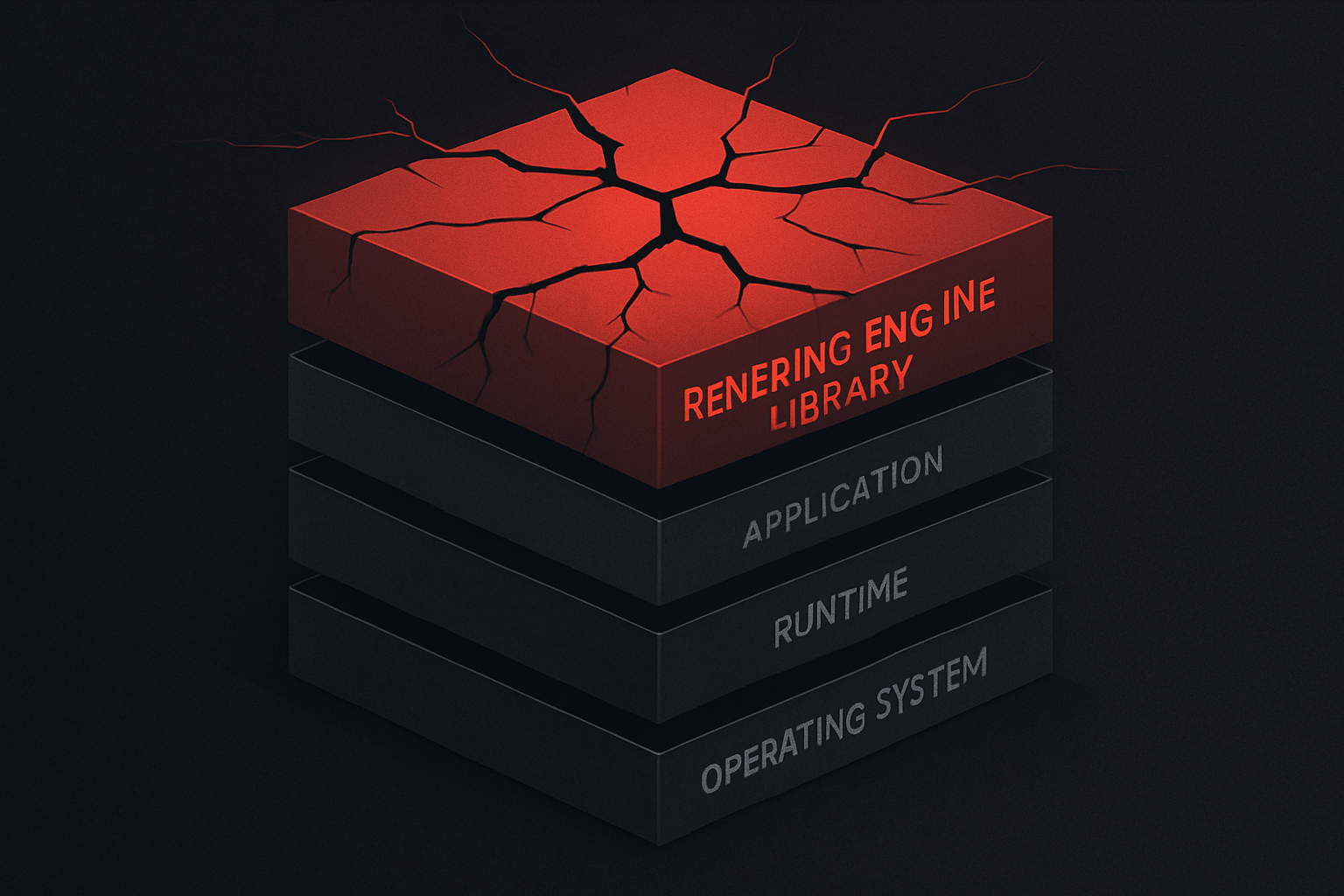
Apple's recent patch for CVE-2026-86950, an out-of-bounds write in CoreGraphics, illustrates a less obvious but critical risk in modern infrastructure: the danger posed by unvetted media processing across operating systems and server applications. The vulnerability allows arbitrary code execution when processing a crafted file, and evidence suggests it was already in use during targeted attacks before disclosure.
For those running hosting infrastructure, web servers, and content delivery pipelines, this incident carries lessons that extend far beyond client-side iOS patches.
Why Rendering Engines Are an Infrastructure Blind Spot
CoreGraphics is not merely a client-side library. It is embedded in server-side image processing, PDF rendering, document conversion tools, and content filtering systems. Many hosting providers, backup systems, and archival platforms rely on these libraries to handle file uploads, thumbnail generation, and media transcoding.
When a rendering engine vulnerability is discovered, the blast radius extends beyond desktops and phones. A malicious image or PDF uploaded to a content management system, or processed by an automated backup service running on a dedicated server, can trigger the same flaw. If your infrastructure processes untrusted media—whether through web applications, API endpoints, or batch jobs—you are in scope.
The fact that this vulnerability was reportedly exploited in targeted attacks before a patch existed suggests threat actors were aware of the flaw earlier than public disclosure. This is common with rendering engine bugs; they are often discovered by security researchers in the wild, reported privately, and then weaponised for months before patches reach all affected systems.
The Patching Lag Problem
Apple's advisory notes that the patch applies to older versions of iOS, iPadOS, and macOS. This is significant: it means millions of devices running supported but not the latest OS versions will receive the patch on different timelines. For infrastructure operators, this cascades into a supply-chain security problem.
If your backup appliances, archival systems, or content processing servers rely on unpatched operating system libraries, they remain exposed for weeks or months after a patch is released. Many organisations also run long-support releases of server operating systems that receive security updates later than client versions.
The practical takeaway is to map where rendering engines are used in your stack. This includes:
- Web application frameworks that handle image uploads or PDFs
- Automated thumbnail or preview generation systems
- Document conversion pipelines
- Backup and archival tools
- DDoS mitigation and WAF solutions that inspect multimedia content
- Email gateways that scan attachments
Input Validation and Sandboxing: Your First Line
Since rendering engine vulnerabilities often stem from processing malformed or crafted files, the defence is multi-layered. First, restrict which file types your infrastructure will process. If you do not need to handle PDFs, disable PDF rendering entirely. If image uploads are needed, whitelist specific formats and validate file headers before passing them to rendering libraries.
Second, run rendering processes in isolation. This means:
- Running media processing in containerised environments with dropped capabilities and read-only filesystems where possible
- Using process isolation or virtualisation to ensure a compromised renderer cannot access sensitive data or escalate privileges
- Rotating credentials and certificates used by batch processing systems regularly
Third, apply patches on a clear schedule. CoreGraphics flaws are not trivial; they warrant priority patching even on systems you consider stable or long-support.
The Broader Pattern
This is not the first rendering engine vulnerability, nor will it be the last. Similar flaws have affected ImageMagick, libjpeg, libpng, and numerous PDF libraries. Each discovery underscores the same truth: unvetted binary file processing is a persistent attack vector in infrastructure.
If you host user-generated content, provide file conversion services, or run automated media pipelines, assume that rendering engine vulnerabilities will affect you periodically. Build your systems defensively: validate inputs, isolate processes, patch promptly, and monitor for suspicious file processing activity.
The CVE will eventually become background noise; the architectural lesson should not.


