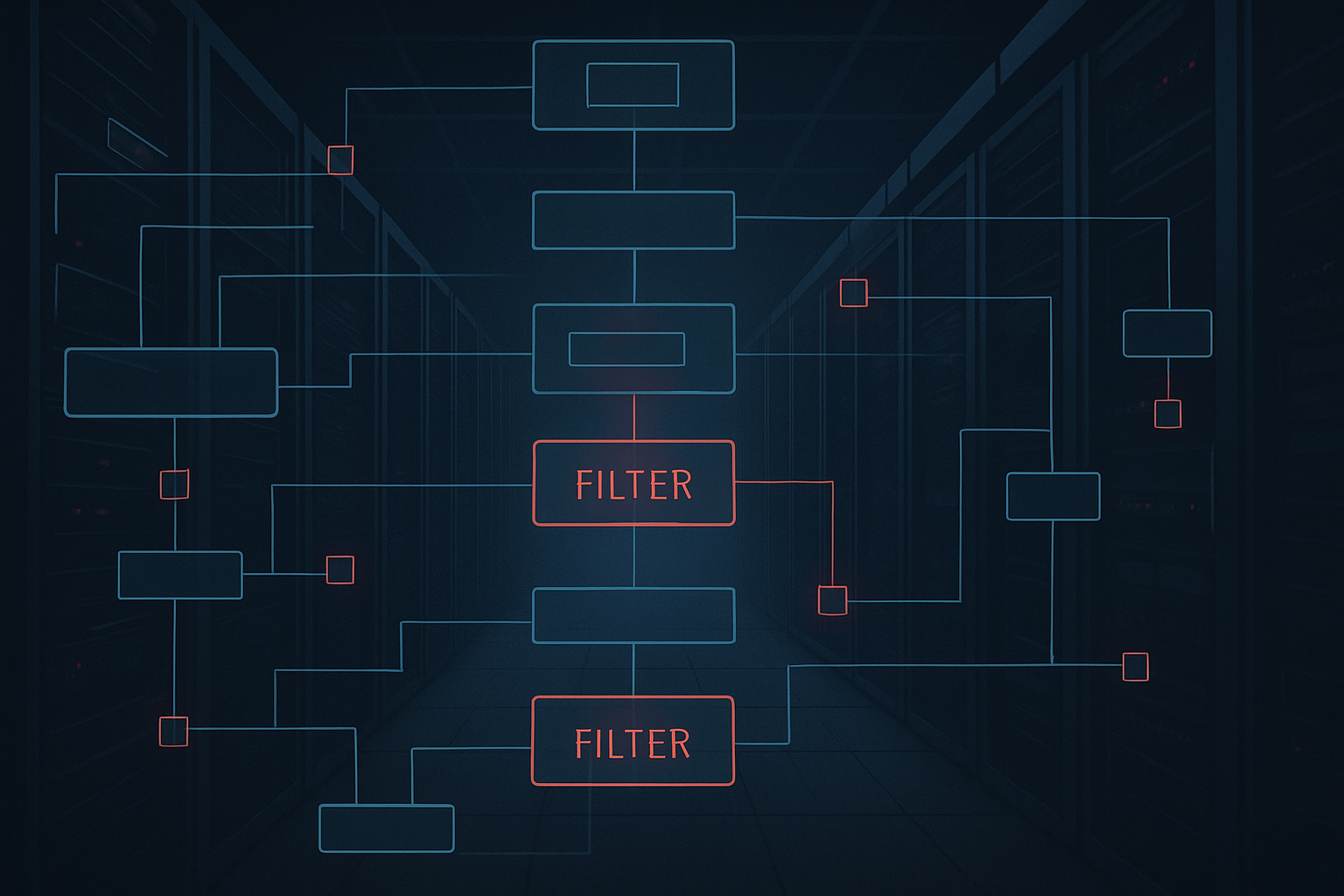
The infrastructure needed to deliver live sports globally operates at scale. Millions of concurrent streams, distributed across multiple datacenters, CDNs, and regional networks—all competing for bandwidth and eyeballs. When rightsholders deploy anti-piracy systems to protect that content, they're ostensibly targeting illegal streams. In practice, the blocking mechanisms often hit far wider targets, disrupting services that have nothing to do with copyright infringement.
The Overblocking Problem
Internet-scale blocking systems struggle with precision. When a rights holder or court order demands that an ISP or CDN provider block access to pirated World Cup streams, the enforcement often relies on crude signals: domain names, IP addresses, URL patterns. These signals leak across legitimate infrastructure. A shared CDN endpoint serving both pirated content and lawful services can result in the entire endpoint being blocked. Shared hosting environments face the same risk. Academic research cited by industry groups such as the CCIA has documented this phenomenon systematically: enforcement efforts designed to protect live sports have generated significant overblocking, where non-infringing services lose connectivity to legitimate users.
Hosting providers and infrastructure operators become unwilling intermediaries. A streaming platform offering lawful content, a communications service, or even an unrelated web property can find itself inaccessible in certain jurisdictions through no fault of its own. The blocking occurs at DNS resolvers, at ISP borders, or at regional chokepoints—places where the granularity of enforcement is inherently poor.
Jurisdiction-Specific Enforcement and its Ripple Effects
European anti-piracy efforts have grown more aggressive in recent years, particularly around major sporting events. Court orders in one jurisdiction can propagate upstream to global infrastructure. A regional sports broadcaster obtains an injunction against a piracy stream; the ISP compliance notice reaches a CDN provider; the CDN's automated systems block the range wider than necessary because distinguishing one stream from hundreds of others on the same infrastructure requires deeper inspection than most operators want to implement.
For operators running distributed infrastructure across multiple jurisdictions, this creates operational complexity. A dedicated server provider or VPS platform serving customers across the EU must implement region-specific filtering rules. The more rules stacked on top of one another, the greater the likelihood that a legitimate customer's traffic will be caught by an overzealous filter.
The Long-Term Risk to Open Infrastructure
What concerns infrastructure engineers is the precedent. If copyright enforcement can justify broad network-level blocking with acceptable false positives, what else might justify it. The systems built to stop sports piracy become the template for blocking other content categories. Each new blocking rule adds latency, increases operational burden, and raises the cost of running compliant infrastructure.
Smaller hosting operators and CDN services are particularly vulnerable. Implementing sophisticated geo-targeted filtering, appeal mechanisms, and forensic logging requires engineering investment. Larger providers can absorb these costs; smaller ones either raise prices, reduce service quality, or relocate to more permissive jurisdictions. Neither outcome strengthens the open internet.
There is also the matter of who bears the legal risk. When a blocking order is imprecise and legitimate services suffer, liability is ambiguous. Is the infrastructure provider liable for not blocking enough. Is it liable for blocking too much. Court decisions have been inconsistent, leaving operators in an uncertain posture.
A Path Forward
The tension between copyright protection and open infrastructure is real, not rhetorical. Rights holders have legitimate interests; so do services operating within the law. The engineering solution—more precise blocking, better logging, faster appeals—exists but is resource-intensive. The policy solution requires clearer liability protections for good-faith compliance efforts and explicit standards for what constitutes acceptable collateral damage.
Until then, infrastructure operators will continue absorbing the costs of enforcement imprecision, passing some of those costs to their customers and some to the operators in less regulated jurisdictions where the blocking burden is lower. The open internet's distributed nature becomes a liability when enforcement systems are designed for an era of centralised gatekeeping.