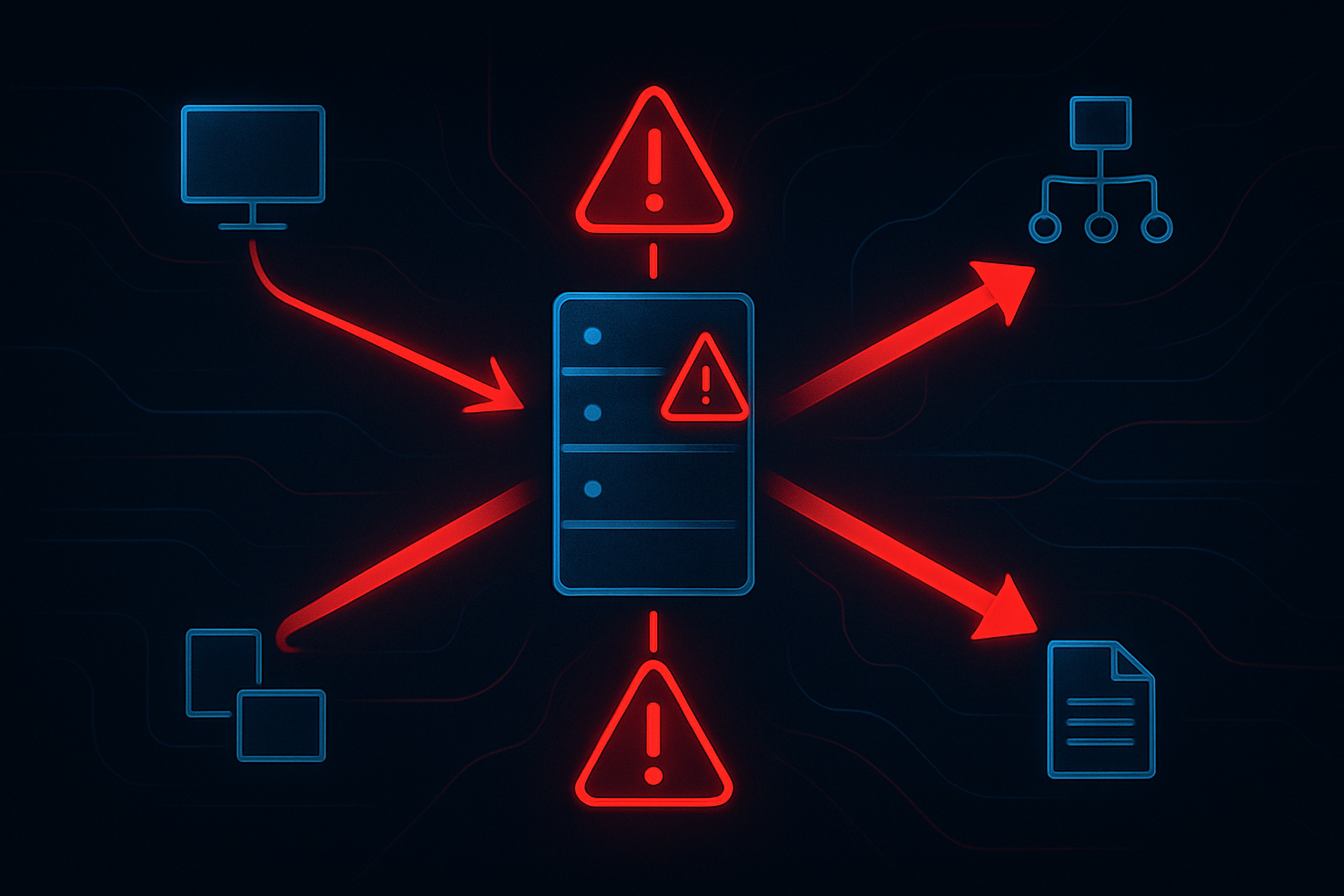
Cisco has released patches for CVE-2026-20230, a server-side request forgery (SSRF) vulnerability in Unified Communications Manager that allows an unauthenticated attacker positioned on the network to write arbitrary files and escalate privileges to root. The availability of public proof-of-concept code means the window for patching has narrowed significantly.
The Attack Chain
The vulnerability operates through a classic SSRF-to-RCE progression. An attacker without credentials can craft requests that cause the Unified CM server to make HTTP calls to arbitrary internal resources or to itself. By controlling the response or leveraging insecure request handling, the attacker can write files to the filesystem. From there, the path to root access is straightforward: overwriting startup scripts, modifying cron jobs, or injecting malicious code into interpreted configuration files.
What makes this variant particularly dangerous is that no initial authentication is required. The attacker needs only network-level access to the Unified CM instance—a realistic threat in environments where the system is exposed to untrusted subnets, compromised clients, or lateral movement from another breach. Cisco's Product Security Incident Response Team (PSIRT) has noted no evidence of in-the-wild exploitation at the time of the advisory, but the release of functional exploit code changes that calculus.
Implications for Unified Communications Infrastructure
Unified Communications Manager is a backbone system in enterprise telephony and messaging environments. Compromise typically yields far more than voice interception: attackers gain access to communication metadata, can manipulate call routing, inject messages, and pivot laterally into other corporate systems. From an infrastructure perspective, a rooted Unified CM server becomes a trusted node within the network, often positioned with broad outbound connectivity and privileged access to directories and databases.
Organisations running Unified CM should treat this as urgent. The presence of public PoC code means that both targeted and opportunistic attackers now have a working blueprint. The time between public exploit availability and mass scanning is typically measured in hours or days, not weeks.
Patching Strategy and Risk Mitigation
Cisco has provided patches for affected versions. However, patching Unified CM in production environments often requires careful coordination with telephony teams, as updates may require service windows or cluster-level procedures. Some organisations may face delays due to compatibility constraints or vendor support timelines.
In parallel with patching, consider network segmentation: restrict access to Unified CM management and signalling ports to authorised subnets only. Implement egress filtering to prevent the compromised server from reaching arbitrary external destinations. Monitor for HTTP requests originating from the Unified CM process that deviate from normal telephony protocols. If the system must remain unpatched temporarily, placement behind a WAF configured to reject malformed or suspicious requests can provide some defensive value, though it is not a substitute for patching.
For organisations hosting communications infrastructure on dedicated servers or cloud instances, this vulnerability underscores the importance of timely vendor updates and the ability to apply patches without lengthy business approval cycles. Automated patch management and inventory tracking become critical in environments with multiple Unified CM deployments.
Looking Ahead
SSRF vulnerabilities remain common in complex enterprise applications because they often exploit legitimate features—internal API calls, file operations, or resource lookups—that are difficult to constrain without breaking functionality. As long as applications must make outbound connections on behalf of users or administrators, SSRF will remain an attractive attack vector.
For infrastructure teams, this incident serves as a reminder that network isolation, least-privilege access, and rapid patch application are not optional luxuries. Even systems positioned as internal-only can be compromised through lateral movement. Treating the compromise of any trusted system as a potential stepping stone to wider network access remains the most realistic defence posture.